
Amazon Alexa & Echo: The Revolutionary Voice That Transformed Smart Homes Forever.
Discover Amazon Alexa & Echo: The Revolutionary Voice That Transformed Smart Homes Forever. From simple voice commands to powerful automation, Amazon Alexa and Amazon Echo devices have reshaped how people control lights, music, security, and everyday tasks—ushering in a smarter, more connected home experience.

The Voice That Changed the Smart Home Forever
A Comprehensive Guide to What It Does, Why It Exists, and Why You Need One
Introduction: The World Before Alexa
Imagine asking the air around you a question — and getting an instant, accurate answer. Imagine saying ‘turn off the lights’ without reaching for a switch, or asking for a recipe while your hands are covered in flour, or setting fifteen alarms just by speaking. Before November 2014, this was science fiction. After Amazon introduced the Echo smart speaker powered by Alexa, it became Tuesday morning.
In just over a decade, Amazon’s Alexa has evolved from a curious novelty — widely mocked when first revealed — into one of the most widely deployed artificial intelligence systems on the planet. With over 100 million Alexa-enabled devices sold by 2019, and a continuously expanding ecosystem of smart home integrations, skills, and now generative AI capabilities with the launch of Alexa+ in 2025, this technology has fundamentally altered how people interact with their homes, their information, and their daily routines. This article explores the origin, evolution, capabilities, and compelling reasons why Alexa and Echo deserve a place in every home.
The Origin Story: How It All Began
A Vision Born in 2010
The seeds of Alexa were planted as early as 2010, inside Amazon’s secretive hardware division, Lab126, located in Silicon Valley and Cambridge, Massachusetts. Work on what would become the Echo began in 2011, internally known as ‘Project D’ — the Kindle was Project A, the Fire Phone was Project B. Amazon founder Jeff Bezos was the driving force, famously inspired by the fictional ship computer aboard the Starship Enterprise in Star Trek, which could answer any question, understand natural language, and respond conversationally.
Bezos envisioned a device that could be controlled entirely by voice — a truly hands-free assistant that would sit in the home and serve as both a portal to information and a hub for connected devices. When Amazon executive Dave Limp first saw the pitch, he recalled thinking: ‘This is going to be hard. It foretold a magical experience. But it would require a lot of inventions.’ Those inventions would take years to materialize.
Building the Brain: Evi, Ivona, and the Voice Problem
Creating an intelligent voice assistant from scratch required Amazon to acquire expertise it didn’t yet have. In 2012, the company acquired Evi, a British AI company founded by computer scientist William Tunstall-Pedoe in 2005, which provided the question-and-answer intelligence system at the core of Alexa. In 2013, Amazon acquired Ivona, a Polish text-to-speech company whose technology was partly inspired by the 1968 film 2001: A Space Odyssey — giving Alexa its voice.
Teaching Alexa to listen was the harder problem. Amazon partnered with Australian data collection firm Appen, filling rooms with Echo devices and paying temporary workers to walk through them, reading scripted questions from tablets. This generated the vast training data needed to teach the AI to recognise human speech patterns across accents, noise levels, and speaking styles. Jeff Bezos famously ordered his team to reduce response latency to under one second — something that had never been achieved by a voice assistant at that time.
The Name and the Launch
The device was originally called the Amazon Flash, and its wake word was meant to be ‘Amazon.’ Engineers at Lab126 worried this would cause chaos — the device would activate every time an Amazon advertisement played on television. They lobbied Bezos to reconsider, and weeks before the first units shipped, the device was renamed the Echo and the wake word became ‘Alexa.’ The name was chosen deliberately: it contains a hard ‘X’ consonant that voice recognition algorithms detect with high precision, reducing false activations. It is also a nod to the Library of Alexandria, the ancient repository of all human knowledge — a fitting symbol for Amazon’s ambitions.
On November 6, 2014, Amazon cautiously launched the Echo — initially offering just 80,000 units, available only to customers who had pre-registered. Critics were swift and merciless: some called it a ‘useless gimmick,’ others saw it as evidence of Amazon’s surveillance tendencies. The sceptics were wrong. Amazon sold out almost immediately, and by the end of 2016 had sold more than eight million Echo and Echo Dot units. The era of the smart speaker had begun.
What Is Alexa — And What Is Echo?
It is important to understand the distinction between the two: Alexa is the brain; Echo is the body. Alexa is Amazon’s cloud-based artificial intelligence voice assistant — a sophisticated AI that processes natural language, understands context, and delivers responses. The Echo is the family of smart speaker and display devices through which users access Alexa. You speak to an Echo; it forwards your voice to Amazon’s servers; Alexa processes the request and delivers an answer back through the device within seconds.
This cloud-based architecture means Alexa gets smarter over time. Every update, every new skill, every improvement to Amazon’s AI models is instantly available to every device — without requiring a hardware upgrade. When Amazon launched Alexa+ in February 2025, powered by generative AI using both Amazon’s own Nova large language models and Anthropic’s Claude, every compatible Echo Show device gained dramatically enhanced conversational abilities overnight.
The Echo Family: A Device for Every Room and Budget
One of Amazon’s most effective strategies has been building a diverse range of Echo devices that cater to every use case and price point:
- Echo Pop: The most affordable entry point at $39.99, the Echo Pop features a compact hemispherical design perfect for bedrooms, kitchens, and small spaces. It delivers full Alexa functionality in a device smaller than an Echo Dot.
Bestseller #1

Bestseller #2

- Echo Dot: The best-selling smart speaker in the world, the Echo Dot is a small, puck-shaped speaker that packs the full Alexa experience into an incredibly affordable package. Ideal for anyone wanting to add voice control to any room.
Bestseller #1

Bestseller #2

- Echo (Standard): The flagship smart speaker, offering significantly improved audio quality with room-filling sound. A balance between affordability and audio performance.
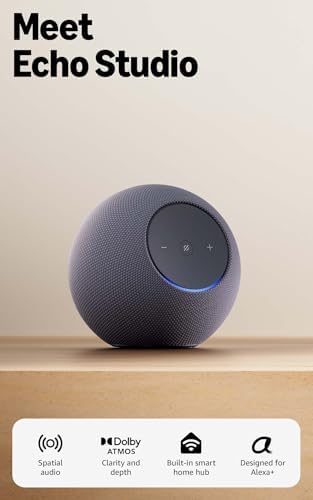
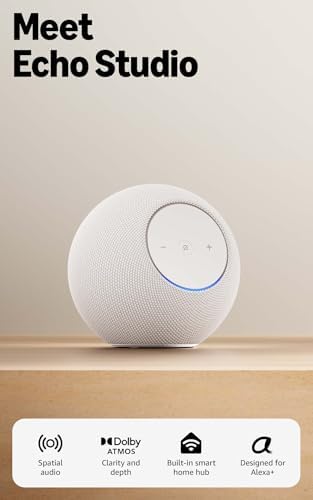
- Echo Studio: Amazon’s premium audio offering, featuring five built-in speakers, Dolby Atmos support, and spatial audio. In October 2025, Amazon released a second-generation Studio that is 40% smaller while delivering the same audiophile-grade sound.
Bestseller #1
Bestseller #2
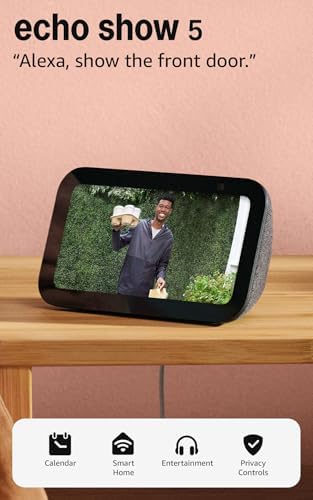
- Echo Show (5, 8, 10, 15, 21): The Echo Show line adds touchscreens to the Alexa experience, enabling video calls, visual recipes, security camera feeds, photo slideshows, and more. The Echo Show 15 and 21 are designed to be wall-mounted, functioning as smart home dashboards.
- Echo Auto: Brings Alexa into your car, enabling hands-free calls, navigation, music streaming, and smart home control while driving.

- Hands-free Alexa accessory – Slim design that’s easy to place in your car and 5-mic built-in so Alexa can hear you over …
- Listen to your favorite music – Ask Alexa to stream playlists from Amazon Music, Apple Music, Spotify, and more, or list…
- Call and message with your voice – Use your voice to make calls, reply to text messages, drop in on Alexa-enabled device…
$54.99
Bestseller #1
Bestseller #2
Bestseller #3
What Alexa Does: A Day in the Life
To understand why Alexa is transformative, it helps to walk through a typical day for an Echo owner. The list of things Alexa can do is extraordinary in its breadth:
Information & Daily Briefings
Wake up and ask Alexa for the weather, and it will not only give you today’s forecast but alert you to rain tomorrow. Ask for the news, and Alexa will play a personalised Flash Briefing from your preferred news outlets. Ask about traffic on your commute, sports scores from last night’s game, flight status, stock prices, or today’s calendar appointments — all answered instantly, hands-free. Alexa can answer general knowledge questions, perform unit conversions, solve arithmetic, set timers and alarms (multiple simultaneously), create shopping and to-do lists, and provide real-time information on 15 supported sports leagues.
Smart Home Control
This is where Alexa truly earns its place in the home. Acting as a central hub for home automation, Alexa is compatible with an enormous ecosystem of smart devices from manufacturers including Philips Hue, Nest, Ring, ecobee, Belkin, LIFX, SmartThings, and hundreds more. It supports multiple wireless protocols including Zigbee, Matter, Thread, and Amazon Sidewalk — meaning it can communicate with almost any smart home device on the market.
The practical applications are extensive. You can say ‘Alexa, turn off all the lights,’ ‘Alexa, set the thermostat to 72 degrees,’ ‘Alexa, lock the front door,’ ‘Alexa, show me the front door camera,’ or ‘Alexa, run the bedtime routine’ — a customised sequence of actions that might dim lights, lock doors, lower the thermostat, and play calming music, all triggered by a single voice command. Amazon reports a 100% increase in smart home device control requests, with smart fans and air conditioners seeing 37% growth — the highest of any category.
Entertainment & Music
Alexa integrates seamlessly with Amazon Music, Spotify, Apple Music, TuneIn, iHeartRadio, Audible, and more. You can request any song, artist, genre, playlist, or decade with your voice. Echo devices can be grouped together to play synchronised music throughout the home. The Echo Studio elevates this further, delivering Dolby Atmos spatial audio that rivals dedicated hi-fi speakers. Alexa can also control Fire TV, read Audible audiobooks, stream podcasts, and provide radio stations from around the world.
Communication & Household Management
Echo devices can make hands-free phone and video calls to other Echo devices or contacts on the Alexa app. The ‘Drop In’ feature lets you instantly connect to other Echo devices in your home, functioning like an intercom. You can send voice messages, set reminders for specific family members, manage household shopping lists collaboratively, and with Echo Show, conduct full video calls. Alexa can also recognise individual voices and provide personalised responses, reminders, and recommendations for each household member.
Alexa Skills: 100,000+ Capabilities
Beyond built-in functions, Alexa’s capabilities can be extended through ‘Skills’ — third-party voice applications developed by companies and independent developers. There are over 100,000 Alexa Skills available, covering categories from meditation and fitness coaching to games, cooking guides, language learning, prayer times, business tools, and children’s entertainment. Companies including Uber, Domino’s, Just Eat, and thousands of others have built Alexa Skills enabling direct voice-activated ordering and interaction.
Alexa+ in 2025: The Generative AI Revolution
In February 2025, Amazon unveiled Alexa+, the most significant upgrade in the assistant’s history. Powered by generative AI — including Amazon’s own Nova large language models and Anthropic’s Claude — Alexa+ represents a quantum leap forward in what a voice assistant can do.
Alexa+ can now hold truly natural, multi-turn conversations rather than responding to isolated commands. It understands and remembers your preferences and important information across sessions, making interactions increasingly personalised over time. Through a model-agnostic system powered by Amazon Bedrock, Alexa+ selects the best AI model for each specific task — delivering state-of-the-art performance across an enormous range of requests.
Perhaps most impressively, Alexa+ has gained genuine agentic capabilities — the ability to take complex, multi-step actions on your behalf by connecting to hundreds of APIs. You can ask Alexa+ to make a dinner reservation for two via OpenTable, book an Uber for a friend, and text them your plans — all in a single request. Alexa+ can read documents you share with it (from emails and manuals to recipes and study materials), extract key information, and add events to your calendar automatically.
For Ring security camera users, Alexa+ can now provide daily summaries of detected camera events and answer specific questions like ‘Did someone take out the garbage bins?’ or ‘When was the last time the dog went out?’ The knowledge foundation is supported by partnerships with major news organisations including AP, Reuters, TIME, USA Today, and Politico — enabling fast, accurate responses on everything from financial markets to sports. Alexa+ is free for Amazon Prime members or $19.99/month for others, rolling out to Echo Show 8, 10, 15, and 21 devices first.
Who Is It For? Alexa Serves Everyone
Families with Children
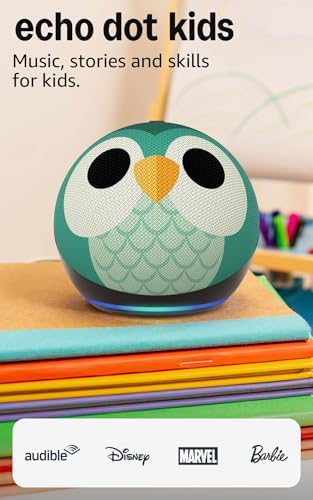
For families, Alexa is a game-changer. Children can ask it homework questions, request bedtime stories, set morning alarms, and play educational games — all hands-free. Amazon Kids+ integration on compatible Echo devices provides child-safe content and parental controls. Echo Dot Kids Edition devices come with durable covers, kid-friendly designs, and a one-year Amazon Kids+ subscription. Parents can set up household routines, manage the family calendar, and call each other between rooms using Drop In.
Older Adults & Those with Accessibility Needs
Alexa has proven transformative for older adults and people with mobility impairments, visual impairments, or other accessibility needs. The ability to control lights, locks, thermostats, and appliances entirely by voice removes the physical barriers that previously limited independence. Alexa can make emergency calls, set medication reminders, play audiobooks at adjustable speeds, and maintain connection with family through easy voice-activated calls — all without needing to navigate a smartphone screen.
Professionals and Remote Workers
For professionals working from home, Alexa manages the ambient environment automatically. Set timers for focused work sessions, ask for quick facts without breaking concentration, manage calendars, start music playlists that improve focus, control room temperature and lighting, and handle calls — all without touching a keyboard or phone. Echo Show devices double as a secondary always-on display for calendar events, weather, or Ring camera feeds.
Music and Entertainment Enthusiasts
For those who value their music, the Echo Studio’s Dolby Atmos audio and spatial sound capabilities make it a premium speaker that happens to be voice-controlled. The ability to fill multiple rooms with synchronised music, request any track ever recorded by voice, and integrate with every major streaming service makes Echo devices the most flexible music solution on the market at any price point.
What You Are Missing Without Alexa
If you do not yet own an Echo device, here is a frank account of what your daily life is missing:
- Friction in your home: Every time you walk across the room to dim the lights, adjust the thermostat, or turn off a device you forgot to switch off, you are doing something a single voice command could handle.
- Time lost to small tasks: Setting alarms, adding items to shopping lists, converting measurements while cooking, looking up quick facts — these take seconds with Alexa. Doing them manually across hundreds of daily micro-tasks adds up to hours each week.
- Disconnected smart devices: If you have smart bulbs, a smart thermostat, a video doorbell, or any smart home device, without a central voice hub like Alexa you are likely managing each one through separate apps. Alexa unifies them under a single interface.
- An always-improving assistant at no additional cost: Unlike a smartphone, your Echo device gets genuinely better over time through software updates. Features you could not do with your device on the day you bought it may be available six months later.
Bestseller #1
Bestseller #2
Bestseller #3
No honest review of Alexa would be complete without addressing the privacy questions it raises. Alexa devices are always listening for the wake word ‘Alexa’ — this is the fundamental mechanism that enables hands-free use. Amazon has faced criticism and scrutiny over this feature, and it is fair to acknowledge that it involves trade-offs.
In response, Amazon has built in a range of privacy controls. Every Echo device features a hardware mute button that physically disconnects the microphone, providing a guarantee that the device is not listening. Users can review and delete their Alexa voice history at any time through the Alexa app or by asking Alexa to delete recordings. Echo devices now include on-device processing capabilities, handling more commands locally without sending audio to the cloud. These controls give users meaningful agency over their privacy.
For the vast majority of users, the practical convenience of Alexa vastly outweighs the privacy considerations — particularly with the controls Amazon has made available. The key is to understand the trade-off, use the privacy tools provided, and make an informed decision.
Conclusion: The Voice of the Future Is Already Here
The Amazon Echo and Alexa represent one of the most successful technology products of the past decade — not because of a single killer feature, but because of the relentless accumulation of hundreds of small improvements to daily life. From a device that could barely play a song without error in 2014, to a generative-AI-powered home agent in 2025 that can book your restaurant, brief you on the news, remember your preferences, and manage your entire home environment — the progress has been staggering.
The library of Alexandria was once the greatest repository of human knowledge ever assembled. It burned. Amazon named its voice assistant after it partly as a tribute, partly as an ambition: to build something that would never burn — a cloud-connected, always-available, perpetually improving assistant that puts the sum of human knowledge, the control of your home, and the convenience of effortless interaction within earshot at all times.
Whether you start with a $39.99 Echo Pop or invest in an Echo Show 15 for your kitchen wall, you are not simply buying a speaker. You are buying the first version of something that will keep getting better — and starting a relationship with the most capable domestic AI assistant ever built. The question is not whether Alexa belongs in your home. It is how much of your life you would like back.
Quick Reference: Amazon Echo Lineup at a Glance
All devices include full Alexa functionality, smart home hub, music streaming, and calling.
- Echo Pop ($39.99): Compact, hemispherical. Best for small rooms.
- Echo Dot (5th Gen) ($49.99): Best-selling device. Full Alexa in any room.
- Echo (4th Gen) ($99.99): Improved audio with premium room-filling sound.
- Echo Studio (2nd Gen) ($199.99): Dolby Atmos, 5 speakers, 40% smaller than original.
- Echo Show 8 ($149.99): 8″ touchscreen, video calls, visual recipes.
- Echo Show 15 ($249.99): 15.6″ wall-mountable smart home dashboard.
- Echo Show 21 ($349.99): 21″ display, the ultimate Alexa+ experience.
Disclaimer: This article contains affiliate links. If you purchase through these links, I may earn a small commission at no additional cost to you
Recommended for reading Best Electric Choppers



[…] Recommended for reading Amazon Alexa & Echo […]
[…] Recommended for reading Amazon Alexa & Echo […]