Best Garmin Watch to Buy 2026 (Full Comparison)
Confused about which Garmin watch to buy in 2025? This detailed comparison breaks down Fenix 8, Venu 4, Forerunner, Instinct, and Enduro models to help you choose the perfect fit.

Why Trust Garmin?
Garmin has spent more than three decades building some of the world’s most trusted GPS and navigation hardware. Originally a GPS device maker for aviation and marine markets, the Kansas-based company (now incorporated in Switzerland, NYSE: GRMN) pivoted aggressively into sports and fitness wearables in the 2000s, and today its Forerunner, Fenix, and Instinct lines are widely regarded as the gold standard for serious athletes and outdoor adventurers.
Garmin’s reputation is built on three pillars that competitors struggle to match simultaneously: GPS accuracy, battery life, and depth of training analytics. The Garmin Connect ecosystem — a companion app and cloud platform — is among the most feature-rich in the industry, and the company’s Connect IQ store lets users download third-party watch faces, widgets, and data fields.
In the year 2024, Strava’s global Year in Sport report identified the Garmin Forerunner as the most popular GPS watch series among its tens of millions of users — a telling endorsement from the world’s largest fitness-tracking community. In 2025 and early 2026, Garmin pushed further, introducing its first-ever built-in satellite and LTE connectivity, a MicroLED display technology, and a unified operating system (Garmin OS) across its flagship lines.
For buyers, this heritage matters: Garmin watches tend to retain software support for years post-launch, their training algorithms are developed with sports physiologists, and the brand’s resale value is consistently strong.
Quick Comparison Summary
| Watch | Best For | Price (USD) | Battery (Smartwatch) | GPS Battery | Maps |
|---|---|---|---|---|---|
| Fenix 8 | Premium multisport adventurers | From $999 | Up to 29 days | Up to 90 hrs | Yes |
| Fenix 8 Pro | Adventurers needing phone-free connectivity | From $1,199 | Up to 27 days | Up to 90 hrs | Yes |
| Venu 4 | Style-conscious fitness enthusiasts | $549 | Up to 14 days | Up to 18 hrs | No |
| Forerunner 570 | Dedicated runners & triathletes | $549 | Up to 11 days | Up to 18 hrs | No |
| Forerunner 165 | Beginner to intermediate runners | $249 | Up to 11 days | Up to 19 hrs | No |
| Instinct 3 Solar | Rugged outdoor durability seekers | From $399 | Up to 28–40 days | Up to 130 hrs (solar) | No (breadcrumb) |
| Enduro 3 | Ultra-endurance athletes & thru-hikers | $899 | Up to 36 days | Up to 320 hrs (solar) | Yes |
Garmin Fenix 8 — The Benchmark Premium Adventure Watch
Price: From $999 | Sizes: 43mm, 47mm, 51mm | Display: AMOLED or MIP Solar
Overview
The Garmin Fenix 8 sits at the heart of Garmin’s premium adventure lineup. Launched in the summer of 2024 and refined through 2025 firmware updates, it represents the convergence of Garmin’s Fenix and Epix lines into a single, unified premium platform. If you want Garmin’s best without the added cost of the Pro’s satellite and LTE features, the Fenix 8 is the benchmark against which everything else is measured.
Key Features & Strengths
Build & Design: The Fenix 8 is purpose-built for demanding environments. It features a dive-rated construction with leakproof metal buttons, a metal sensor guard cover, a titanium bezel, and a built-in LED flashlight. Whether you choose the AMOLED or MIP Solar display, the watch is designed to accompany you underwater and on mountaintops alike.
Display Options: Buyers can choose between an AMOLED display (vivid, high-resolution colour) or a MIP Solar display (more muted but dramatically better battery life, with the added benefit of passive solar charging). This flexibility sets the Fenix 8 apart from most competitors.
GPS & Navigation: The Fenix 8 includes preloaded TopoActive maps, multi-band dual-frequency GNSS, and dynamic round-trip routing — meaning you can set a distance on your wrist and the watch will suggest a loop route that brings you home on time. ClimbPro shows upcoming climb profiles, and breadcrumb navigation keeps you on track on unfamiliar terrain.
Training & Health: Garmin loads the Fenix 8 with its full suite of training tools: Training Readiness, Training Status, VO2 Max estimation, Body Battery, HRV Status, Endurance Score, Hill Score, Daily Suggested Workouts, sleep coaching, and the Garmin ECG App. For triathletes, it supports structured multisport workouts and Garmin Triathlon Coach plans.
Smart Features: A built-in speaker and microphone enable Bluetooth calls, voice commands, and on-wrist interactions. Music storage (Spotify, Deezer, Amazon Music) and Garmin Pay round out the smartwatch experience. The Fenix 8 now runs on Garmin’s unified OS platform, meaning software updates roll out quickly across the ecosystem.
Battery Life: In AMOLED smartwatch mode, expect up to 29 days. MIP Solar models can push significantly further, especially with adequate sun exposure.
Who Is the Fenix 8 For?
The Fenix 8 suits serious athletes and adventurers who need preloaded maps, rugged durability, and Garmin’s complete analytics toolkit — but who don’t require phone-free satellite messaging. Trail runners, ultramarathon competitors, cyclists, triathletes, mountaineers, and divers all fit the profile. It’s also a strong choice for anyone upgrading from an older Fenix or Epix who wants the unified AMOLED/MIP flexibility without paying for Pro connectivity features they may never use.

- Advanced multisport GPS smartwatch for athletes/adventurers features a bright 1.4” AMOLED display, stainless steel bezel…
- Power up your body’s performance, endurance and resistance to injury with targeted strength training plans, real-time st…
- Battery performance: up to 16 days in smartwatch mode; up to 47 hours in GPS mode. Fits wrists with the following circum…
$989.95
Garmin Fenix 8 Pro — The Next Level: LTE, Satellite & MicroLED
Price: From $1,199 (AMOLED) | $1,999–$2,799 (MicroLED) | Sizes: 47mm, 51mm | Display: AMOLED or MicroLED
Overview
Launched on September 3, 2025, the Fenix 8 Pro is Garmin’s most technologically ambitious watch ever. It builds directly on the Fenix 8’s foundation — inheriting all its maps, navigation, training, and health features — and adds two genuinely game-changing capabilities: built-in LTE-M and two-way satellite messaging via Garmin inReach technology, and a brand-new MicroLED display option for the 51mm variant that delivers 4,500 nits of brightness — the brightest display ever fitted to a smartwatch.
Key Features & Strengths
LTE + Satellite Connectivity: For the first time in any serious adventure watch, the Fenix 8 Pro lets athletes leave their phone behind and still stay in contact. Via LTE-M networks and the Skylo satellite network, users can send and receive text messages, share their location via LiveTrack, trigger an interactive SOS to Garmin’s 24/7 Response Centre (reachable in over 200 languages), make and receive voice calls, and exchange 30-second voice messages. Satellite messaging covers areas up to 50 miles offshore and requires an active inReach subscription plan (from $7.99/month). It’s worth noting that satellite messages require orienting the wrist in a specific direction toward the satellite — a practical limitation compared to a dedicated inReach device, but a remarkable achievement for a watch.
MicroLED Display (51mm only): Featuring over 400,000 individual LEDs, the Fenix 8 Pro MicroLED delivers peak brightness of 4,500 nits — more than double the roughly 2,000 nits of its AMOLED sibling. Colours are vivid, viewing angles are wide, and legibility in direct sunlight or snow glare is exceptional. The trade-off is battery life: the MicroLED version offers up to 10 days in smartwatch mode, compared to 27 days for the AMOLED models.
AMOLED Pro Models: The 47mm and 51mm AMOLED Fenix 8 Pro models push approximately 2,000 nits of brightness — a meaningful improvement on the standard Fenix 8 — while maintaining up to 27 days of smartwatch battery life. These represent the sensible balance point for most buyers.
Everything From Fenix 8, Plus More: The Fenix 8 Pro includes new running metrics borrowed from the Forerunner 970: Running Economy (efficiency at different paces), Running Tolerance, and Step Speed Loss. Combined with the preloaded TopoActive maps, ECG App, sleep coaching, Endurance and Hill Scores, and all the navigation tools of the standard Fenix 8, it’s Garmin’s most comprehensive sports watch.
Design & Build: Titanium bezel, sapphire lens, leakproof metal buttons, LED flashlight, and louder speakers than the Fenix 8. Available in 47mm and 51mm only — the 43mm was dropped to accommodate the antenna required for LTE and satellite.
Who Is the Fenix 8 Pro For?
The Fenix 8 Pro targets serious outdoor athletes who venture into remote or signal-free environments and want safety communication built into their watch rather than carried separately. It’s ideal for trail and ultramarathon runners who explore backcountry terrain, mountaineers, solo adventurers, and serious endurance athletes who want Garmin’s top performance metrics alongside phone-free connectivity. The MicroLED version, despite its reduced battery, appeals to those who prioritise display quality above all — particularly for map reading in harsh light conditions.

- Multisport GPS smartwatch with built-in inReach technology for two-way satellite and LTE connectivity (active subscripti…
- Rugged design with a bright 1.4″ AMOLED touchscreen display, titanium bezel, scratch-resistant sapphire lens and other p…
- In an emergency, inReach satellite technology allows you to trigger an interactive SOS message to the Garmin ResponseSM …
$1,299.99
Garmin Venu 4 — Lifestyle Meets Serious Fitness
Price: $549 | Sizes: 41mm, 45mm | Display: AMOLED
Overview
Announced September 17, 2025 and available from September 22, the Garmin Venu 4 is the brand’s most refined lifestyle-first smartwatch to date. It bridges the gap between Garmin’s sport-focused watches and the everyday appeal of devices like the Apple Watch or Samsung Galaxy Watch — while maintaining the training depth and battery life that make Garmin distinctive. Reviewers from Tom’s Guide, Wareable, TechRadar, and Android Central have praised it as a substantial upgrade over the Venu 3, noting that it now effectively shares the same features and unified Garmin OS platform as the Forerunner 570.
Key Features & Strengths
Design & Build: The Venu 4 moves to a full metal case — a first for the Venu series — available in 41mm and 45mm. The steel casing feels noticeably more premium than its predecessor and sits comfortably between a gym session and an office meeting. Colour and strap options are among the most unisex in Garmin’s lineup.
Display: A bright, vivid AMOLED touchscreen that’s responsive and highly readable in direct sunlight. The always-on display option is available, though battery life drops accordingly.
Training & Health — Premium Grade: Despite its lifestyle focus, the Venu 4 runs on Garmin’s unified OS platform and carries training features previously reserved for the Forerunner and Fenix lines, including Training Readiness, Training Status, Load Ratio, projected race time predictor, heat and altitude acclimation, HRV Status, and Daily Suggested Workouts for running, cycling, walking, and general fitness. Garmin Triathlon Coach plans and structured multisport workouts are also included.
GPS Accuracy: The Venu 4 introduces multi-band dual-frequency GNSS with SatIQ technology — a major step up from the Venu 3’s single-band GPS. In independent GPS testing, reviewers found accuracy on a par with the Forerunner 570 and Fenix 8 Pro, excelling even in dense urban canyons.
New Health Features: The ECG App (an upgrade over the Venu 3), a new Health Status monitor that tracks overnight biometric ranges, Lifestyle Logging (manually recording caffeine, meals, sleep patterns, and more to correlate with HRV and stress), Sleep Alignment and Sleep Consistency features, and Body Battery monitoring give the Venu 4 a health tracking depth that approaches dedicated health wearables like Whoop.
Flashlight: A trickle-down from Garmin’s high-end watches, the Venu 4 now includes a built-in LED flashlight with white and red modes — useful for night runs and everyday low-light situations.
Smart Features: On-wrist speaker and microphone for Bluetooth calls, Garmin Pay, music storage and streaming, morning and evening reports, and over 80 sports profiles. The updated Garmin OS interface is significantly more intuitive than previous Venu generations.
Battery Life: Up to 14 days in smartwatch mode, up to 18 hours with GPS active.
What’s Missing?
The Venu 4 doesn’t offer on-watch maps (navigation is breadcrumb and arrow-based), and it has no LTE connectivity — phone pairing is required for calls and full notifications. The move to two buttons (from three) has also attracted some criticism. At $549, it’s a $100 premium over its predecessor, though the metal case, dual-band GPS, ECG, and flashlight additions largely justify the increase.
Who Is the Venu 4 For?
The Venu 4 suits fitness-conscious individuals who want a watch that looks at home in the office but performs seriously during workouts. It’s the natural choice for upgraders from older Venu or Vivoactive models, Apple Watch users who want dramatically better battery life without sacrificing health tracking depth, and anyone who wants Garmin’s best health and training analytics in an elegant, non-sporty form factor.

- Smartwatch with a bright, colorful display, stainless steel design, and built-in flashlight; up to 12 days of battery li…
- Make improvements to promote a healthier lifestyle and know your body better with extensive health monitoring features, …
- Get a sleep score and personalized sleep coaching, including recommendations for how much sleep you need, tips on how to…
$549.99
Garmin Forerunner 570 — The Mid-Range Running Specialist
Price: $549 | Sizes: 42mm, 47mm | Display: AMOLED
Overview
Launched in May 2025, the Forerunner 570 is Garmin’s mid-range running and triathlon watch — the successor to the widely praised Forerunner 265. It carries forward the 265’s celebrated balance of features and portability, adds a new aluminium bezel, a brighter and larger AMOLED display, a built-in speaker and microphone, the Elevate Gen 5 heart rate sensor, and new training tools. At $549, it shares the same price as the Venu 4, making the choice between them essentially a question of design philosophy (sport-first vs. lifestyle-first) rather than budget.
Key Features & Strengths
Design: The 570 introduces Garmin’s most expressive Forerunner design to date, with vibrant two-tone colour options including Raspberry/Mango, Amp Yellow, and Indigo alongside standard black. The aluminium bezel is a step up from the 265’s polymer, though Corning Gorilla Glass 3 is used rather than sapphire. Available in 42mm and 47mm — the larger version features the same 1.4-inch display as the Forerunner 970.
Training & Performance Analytics: The Forerunner 570 carries Garmin’s full running analytics suite: Training Readiness, Training Status, Daily Suggested Workouts, Acute Load, VO2 Max, wrist-based running power, running dynamics, Garmin Triathlon Coach plans, and structured multisport workouts. Morning and evening reports provide a daily digest of health and recovery status. Athletes preparing for races benefit from AutoLap by timing gates, projected race time predictor, and suggested finish line estimates.
Heart Rate & Sensors: The new Elevate Gen 5 optical sensor delivers improved accuracy in challenging conditions (cold weather, downhill running) compared to the Gen 4 in the Forerunner 265. It also adds nightly skin temperature readings for deeper recovery insights. SpO2, altimeter, and multi-band GNSS with SatIQ are all included.
Smart Features: The built-in speaker and microphone enable Bluetooth calls and access to phone-based voice assistants (Siri or Google Assistant). Music storage (Spotify, Deezer, Amazon Music), Garmin Pay, and incident detection with LiveTrack complete a strong connected feature set.
Battery Life: Up to 11 days in smartwatch mode (42mm) and slightly longer for the 47mm. Up to 18 hours of GPS tracking.
What’s Missing?
The most significant omission is on-watch maps — the Forerunner 570 navigates via breadcrumb trail and pointer rather than full TopoActive maps. At $549 in a market where several competitors now offer mapping, this remains a contentious decision. The watch also lacks the ECG App (which requires metal contacts not present on its polymer back case) and the LED flashlight found on the Forerunner 970 and Venu 4. Storage is 8GB — smaller than the 32GB of the 970.
Who Is the Forerunner 570 For?
The Forerunner 570 targets serious runners and triathletes who prioritise sport performance over smartwatch features or map navigation. Its five-button layout makes it easier to operate in rain, with gloves, or mid-race compared to the touchscreen-centric Venu 4. If you run 40+ miles a week, follow structured training plans, and compete in road races or triathlons, the 570 provides exactly the analytics depth you need at a mid-range price. Anyone needing maps, however, should look to the Forerunner 970, Fenix 8, or Enduro 3.

- Our brightest AMOLED touchscreen display with button controls and an aluminum bezel in 42 mm size to fit smaller wrists
- Up to 10 days of battery life in smartwatch mode and up to 18 hours in GPS mode for a more complete picture of your trai…
- Train for an event, achieve a milestone, or improve your fitness with Garmin Coach training plans; these running and tri…
$549.99
Garmin Forerunner 165 — The Best Value Entry Point
Price: $249 ($299 with music) | Size: 43mm (single size) | Display: AMOLED
Overview
The Garmin Forerunner 165 represents one of the clearest value propositions in the entire Garmin lineup. Launched in early 2024, it brought an AMOLED touchscreen and a generous feature set down to Garmin’s most accessible Forerunner price point. In its first year, it quickly became one of Garmin’s best-selling watches, praised by reviewers at NBC Select, Live Science, DC Rainmaker, and CleverHiker as the ideal entry point for runners new to GPS tracking or fitness enthusiasts moving beyond basic step-counting bands.
Key Features & Strengths
Display: A 1.2-inch AMOLED touchscreen with 390×390 pixel resolution — vivid, colourful, and a generational leap forward from the MIP displays of older entry-level Garmin models. Chemically strengthened glass provides reasonable scratch resistance.
GPS Performance: Single-band GPS (not dual-frequency/multi-band) that delivers solid accuracy for road and trail running. In independent tests, distance accuracy was within hundredths of a mile on known routes, and track wobble only appeared in extremely dense tree cover. For the target audience — beginner to intermediate runners — the accuracy is more than sufficient.
Training Features: Daily Suggested Workouts (personalised and adaptive), Garmin Coach training plans for 5K, 10K, and half marathon distances, VO2 Max estimation, Body Battery energy monitoring, stress tracking, sleep scoring (including naps), menstrual cycle tracking, and 25+ built-in activity profiles covering running, cycling, HIIT, strength, and more. The morning report delivers a daily health and recovery overview.
Heart Rate: The Elevate Gen 4 optical sensor provides reliable heart rate monitoring for steady-state activities. Like most wrist-based sensors, it can lag slightly during rapid intensity changes in interval sessions — for those workouts, pairing with a chest strap is advisable.
Smart Features: Smart notifications from iPhone or Android, the standard Garmin Pay contactless payments, incident detection, and LiveTrack safety features. The Music edition adds 4GB of offline storage for Spotify and Deezer playlists.
Build & Comfort: At just 39 grams with a resin case and soft silicone band, the Forerunner 165 is one of the most comfortable watches in Garmin’s lineup for 24/7 wear, including sleep tracking.
Battery Life: Up to 11 days in smartwatch mode, up to 19 hours with GPS active — competitive for the price range, though below watches with MIP displays.
What’s Missing?
The Forerunner 165 lacks the dual-frequency GNSS of the 570, Training Readiness, advanced Training Load analysis, maps, a speaker/microphone, ECG capability, and the full triathlon mode. These are intentional product differentiation decisions rather than oversights, and for most beginner to intermediate runners, none of these omissions will be felt in daily use.
Who Is the Forerunner 165 For?
The Forerunner 165 is the best starting point for anyone new to Garmin or GPS running watches who wants a vibrant, easy-to-use watch with genuine training analytics at an accessible price. It’s ideal for beginner runners training for their first 5K or half marathon, fitness enthusiasts who want more than a step counter, and anyone switching from a basic Apple Watch SE or Fitbit who wants Garmin’s superior GPS tracking and battery life without the investment of a premium watch.

- Easy-to-use running smartwatch with built-in GPS for pace/distance and wrist-based heart rate; brilliant AMOLED touchscr…
- Up to 11 days of battery life in smartwatch mode and up to 19 hours in GPS mode
- Reach your goals with personalized daily suggested workouts that adapt based on performance and recovery; use Garmin Coa…
$199.99
Garmin Instinct 3 Solar — Rugged, Solar-Powered Simplicity
Price: From $399 (45mm) | Sizes: 45mm, 50mm | Display: MIP Solar (monochrome)
Overview
Launched in January 2025, the Garmin Instinct 3 Solar is the watch Garmin designed for people who want genuine toughness, extraordinary battery life, and total reliability in the field — without the premium price tag of the Fenix or the complexity of a full smartwatch. It inherits the Instinct series’ signature rugged aesthetic (a design often compared to the Casio G-Shock) while delivering meaningful upgrades over the Instinct 2: a solar charging system that is five times more powerful than its predecessor, dual-frequency GNSS with SatIQ, a built-in flashlight on both case sizes, Garmin Pay, and an expanded health and training feature set.
Key Features & Strengths
Build & Durability: The Instinct 3 Solar is built to MIL-STD-810 standards for thermal and shock resistance, with a fiber-reinforced polymer case, a metal-reinforced bezel, a scratch-resistant lens, and a 10 ATM water rating (suitable to 100 metres). It’s designed to withstand extreme temperatures, impacts, and submersion — the kind of watch you can wear through a three-hour river crossing, a ski descent, or a remote desert hike without a second thought.
Solar Battery Life: This is where the Instinct 3 Solar genuinely impresses. The 45mm model delivers up to 28 days in smartwatch mode, extending to unlimited with adequate solar exposure. In GPS-only mode with solar, it achieves up to 130 hours of tracking. The 50mm Solar goes even further — up to 60 hours of GPS-only tracking, or 260 hours with solar. In Expedition GPS mode, both models can theoretically run indefinitely in sufficient sunlight, making the Instinct 3 Solar a compelling option for thru-hikers and multi-week expeditions. Reviewing the 50mm Solar after real-world hikes, adventurers have reported going weeks without needing a wall charge.
Five-Button Interface: All Instinct 3 Solar models rely exclusively on physical buttons — there is no touchscreen. In the field, this is an advantage: wet fingers, gloves, and cold temperatures don’t interfere with operation. Every press is deliberate and predictable.
GPS & Navigation: Multi-band dual-frequency GNSS with SatIQ for optimised accuracy and battery efficiency. Navigation is via breadcrumb trail — the Instinct 3 Solar does not carry onboard maps, which is its most significant limitation relative to the Fenix or Enduro. TracBack navigation and course following via Garmin Connect or the Garmin Explore app cover most trail navigation needs.
Health & Training: Heart rate (Elevate Gen 4), HRV Status, Pulse Ox, stress tracking, Body Battery, sleep tracking, women’s health tracking, and over 75 preprogrammed activity profiles. Training Load Focus and Training Load Ratio have been added from the Instinct 2. A 3-axis compass and barometric altimeter are built in, alongside Garmin Pay for contactless payments.
Flashlight: A built-in LED flashlight (new to both 45mm and 50mm, previously limited to the larger Instinct 2X) adds genuine utility for night-time navigation and camp use.
What’s Missing?
No onboard maps (breadcrumb only), no AMOLED display (the Solar is MIP monochrome only — an AMOLED version exists separately), no speaker/microphone, and no music storage. For buyers who primarily want a durable outdoor watch with outstanding battery life and simple, reliable operation, these trade-offs make sense. For those who want maps or media playback, the Enduro 3 or Fenix 8 are better fits.
Who Is the Instinct 3 Solar For?
The Instinct 3 Solar is the ideal choice for hikers, thru-hikers, trail runners, hunters, climbers, and outdoor enthusiasts who prioritise durability and battery life over display quality and smartwatch features. It’s particularly compelling for long-distance hikers doing trips of a week or longer where charging access is unpredictable, for those who work in harsh physical environments, and for anyone drawn to the no-nonsense G-Shock aesthetic. At $399 for the 45mm, it represents genuine value in Garmin’s outdoor watch lineup.

- Make a bold statement with this rugged GPS smartwatch, featuring a 1.1” display with solar charging lens and unlimited b…
- Engineered with a supertough 50 mm fiber-reinforced polymer case and metal-reinforced bezel
- Built-in LED flashlight with variable intensities and strobe modes gives you greater visibility in the outdoors and prov…
$446.95
Garmin Enduro 3 — The Ultra-Endurance Powerhouse
Price: $899 | Size: 51mm (single size only) | Display: MIP Solar
Overview
The Garmin Enduro 3 is the watch for athletes who genuinely push the limits of human endurance — and equipment. Launched alongside the Fenix 8 in the summer of 2024, it has a singular mission: deliver the most comprehensive Garmin feature set with the longest battery life available on any Garmin GPS watch, at a price that undercuts the Fenix 8. Reviewers at Outdoor Gear Lab, GearJunkie, The Trek, TechRadar, Wareable, and TrackBetter have consistently praised it as the smarter financial choice over the Fenix 8 for anyone who doesn’t need dive modes, a speaker/microphone, or an AMOLED display.
Key Features & Strengths
Battery Life — The Flagship Feature: The Enduro 3 offers up to 36 days in standard smartwatch mode, and with its solar charging ring, that extends dramatically further. In GPS-only mode with solar, Garmin rates the watch at up to 320 hours of activity tracking — over 13 continuous days of GPS-on recording. In one six-month real-world test, a reviewer tracked 22 activities totalling 31.5 hours over 22 days, ending at 4% battery — with full-featured sleep tracking running continuously. For ultras, expeditions, and thru-hikes, no other watch comes close.
Solar Charging — Redesigned: Unlike the Enduro 2’s translucent solar film over the display, the Enduro 3 moves the solar panel to a ring surrounding the screen — improving both display readability and solar charging efficiency. The ring generates more power than the Enduro 2’s design despite the reduced solar area, thanks to advances in solar cell efficiency.
Fenix 8-Level Features (Minus Dive & Speaker): The Enduro 3 includes preloaded multi-continent TopoActive maps with terrain contour lines, dynamic round-trip routing (new in this generation), ClimbPro, breadcrumb and turn-by-turn navigation, and the ability to load routes from Strava, Komoot, and other platforms. Training features match the Fenix 8: Training Readiness, Training Status, Endurance Score, Hill Score, Daily Suggested Workouts, HRV Status, Elevate Gen 5 heart rate sensor, and the Garmin ECG App (now available in the US). The new Garmin Share feature lets you send routes and workouts between compatible Garmin watches at the trailhead.
Build & Weight: Despite its 51mm size, the Enduro 3 weighs just 63 grams — over 34% lighter than the Fenix 8, thanks to its fiber-reinforced polymer case (with titanium bezel and sapphire crystal). The UltraFit nylon strap breathes well, dries fast, and never loosens during activity. The combination of a large screen and low weight makes it particularly well-suited for running, where heavier watches become noticeable over long distances.
Navigation: The Enduro 3’s mapping and navigation tools match the Fenix 8, including NextFork (distance to next trail junction), off-course alerts, and course following with turn-by-turn prompts. In testing on race routes, off-course alerts prevented costly navigational errors during multi-hour efforts.
Smart Features: No speaker/microphone (and thus no Bluetooth calls or voice assistant), but Garmin Pay, offline music (Spotify, Deezer, Amazon Music, YouTube Music for Premium subscribers) and Garmin Share are included. No voice assistant, but given the Enduro’s target user, this is considered an acceptable trade-off.
Price Advantage: At $899, the Enduro 3 is meaningfully cheaper than the Fenix 8 ($999+) and dramatically cheaper than the Fenix 8 Pro, while offering longer battery life and nearly identical sports and navigation features.
Who Is the Enduro 3 For?
The Enduro 3 is built for ultramarathon runners, long-distance trail runners, multi-day backpackers and thru-hikers, cyclists tackling epic endurance rides, and anyone who needs a capable, map-equipped GPS watch that won’t need charging mid-expedition. It’s the right choice for athletes who don’t need phone-free satellite messaging (Fenix 8 Pro), don’t need dive modes, and can accept a MIP rather than AMOLED display — in exchange for the best battery life and competitive price in Garmin’s premium range.

- Built for the toughest challenges, the Garmin Enduro 3 features a lightweight 63g design with a durable titanium bezel a…
- Experience unrivaled battery life with solar power technology, providing up to 320 hours in GPS mode and 90 days in smar…
- Navigate with precision thanks to SATIQ technology and multi-band GPS, offering superior accuracy in the most challengin…
$917.99
Head-to-Head Comparison Table
| Feature | Fenix 8 | Fenix 8 Pro | Venu 4 | FR 570 | FR 165 | Instinct 3 Solar | Enduro 3 |
|---|---|---|---|---|---|---|---|
| Price (from) | $999 | $1,199 | $549 | $549 | $249 | $399 | $899 |
| Display type | AMOLED / MIP Solar | AMOLED / MicroLED | AMOLED | AMOLED | AMOLED | MIP Solar | MIP Solar |
| Smartwatch battery | 29 days | 27 days | 14 days | 11 days | 11 days | 28–40 days | 36 days |
| GPS battery | Up to 90 hrs | Up to 90 hrs | 18 hrs | 18 hrs | 19 hrs | 130 hrs (solar) | 320 hrs (solar) |
| Onboard maps | ✅ | ✅ | ❌ | ❌ | ❌ | ❌ | ✅ |
| Multi-band GNSS | ✅ | ✅ | ✅ | ✅ | ❌ | ✅ | ✅ |
| LTE / Satellite | ❌ | ✅ | ❌ | ❌ | ❌ | ❌ | ❌ |
| Speaker / Mic | ✅ | ✅ | ✅ | ✅ | ❌ | ❌ | ❌ |
| ECG App | ✅ | ✅ | ✅ | ❌ | ❌ | ❌ | ✅ (US) |
| Flashlight | ✅ | ✅ | ✅ | ❌ | ❌ | ✅ | ✅ |
| Solar charging | Optional (MIP) | ❌ | ❌ | ❌ | ❌ | ✅ | ✅ |
| Touchscreen | ✅ | ✅ | ✅ | ✅ | ✅ | ❌ | ✅ |
| Music storage | ✅ | ✅ | ✅ | ✅ | ✅ (Music ed.) | ❌ | ✅ |
| Dive rating | ✅ | ✅ | ❌ | ❌ | ❌ | 10 ATM | ❌ |
| Training Readiness | ✅ | ✅ | ✅ | ✅ | ❌ | Partial | ✅ |
| Weight | ~97g (47mm) | ~100g (47mm) | ~46g (45mm) | ~50g (47mm) | ~39g | ~53g (45mm) | ~63g |
Which Garmin Watch Should You Buy?
Choose the Garmin Fenix 8 if you want Garmin’s premium adventure platform with full maps, dive capability, speaker/mic, and the flexibility of AMOLED or MIP Solar — without paying the Pro premium for satellite connectivity you may rarely use.
Choose the Garmin Fenix 8 Pro if you regularly venture into remote areas where phone signal is absent, and the ability to send messages, share your location, or trigger an SOS from your wrist — without a phone — justifies the significant price premium. The MicroLED version is worth considering only if extreme display brightness is your priority and you accept reduced battery life.
Choose the Garmin Venu 4 if you want Garmin’s most comprehensive health and training analytics in an elegant, office-appropriate form factor. It’s the best Garmin option for people who also want to impress in non-athletic settings, and who prioritise sleep tracking, ECG, and advanced wellness metrics alongside dual-band GPS and a beautiful display.
Choose the Garmin Forerunner 570 if you’re a dedicated runner or triathlete who wants the best running-specific analytics, prefers a sport-first design with five physical buttons for easy in-race operation, and doesn’t need onboard maps. At the same price as the Venu 4, the choice between them is really about aesthetics and a preference for buttons vs. a touchscreen.
Choose the Garmin Forerunner 165 if you’re new to GPS running watches or fitness tracking and want Garmin’s trusted ecosystem, vibrant AMOLED display, and solid training tools at the most accessible price in the lineup. It’s also an excellent gift for a runner stepping up from a basic tracker.
Choose the Garmin Instinct 3 Solar if you want the toughest, most battery-efficient watch in Garmin’s lineup at a mid-range price, and you don’t need maps, music, or a colour display. It’s the clear choice for thru-hikers, outdoor workers, and anyone whose priority is a watch that simply will not die.
Choose the Garmin Enduro 3 if you’re a serious ultra-endurance athlete, backpacker, or expedition adventurer who wants Fenix 8-level performance maps, navigation, and training analytics — with significantly superior battery life and a lighter build — for $100 less than the entry Fenix 8. It’s the most rational Garmin purchase for anyone who regularly goes more than a week between charges.
Frequently Asked Questions
Q: What is the best Garmin watch in 2025/2026? A: The “best” Garmin watch depends on your needs. For premium multisport adventurers, the Fenix 8 or Fenix 8 Pro leads the lineup. For pure endurance and battery life, the Enduro 3 is the standout. For everyday fitness with a stylish design, the Venu 4 is Garmin’s most polished smartwatch. For value, the Forerunner 165 is hard to beat.
Q: Does the Garmin Fenix 8 Pro work without a phone? A: Yes. The Fenix 8 Pro’s built-in LTE and Skylo satellite connectivity allow you to send and receive messages, share your location via LiveTrack, make voice calls (using the Garmin Messenger app), and trigger SOS alerts — all without a smartphone nearby. An active inReach subscription plan is required.
Q: Which Garmin watch has the best battery life? A: The Garmin Enduro 3 delivers the best battery life, with up to 320 hours of GPS tracking in solar conditions. The Instinct 3 Solar is close behind for its size and price, offering unlimited smartwatch battery with sufficient solar exposure.
Q: Is the Garmin Forerunner 165 good for beginners? A: Yes — the Forerunner 165 is widely regarded as one of Garmin’s best-value watches and an excellent entry point for beginner to intermediate runners. It provides Garmin Coach training plans, Daily Suggested Workouts, Body Battery, GPS tracking, and an AMOLED display for $249.
Q: Does the Garmin Venu 4 have maps? A: No. The Venu 4 does not include onboard maps. Navigation is breadcrumb-based (a line and arrow pointing toward a destination). For full TopoActive map navigation, look to the Fenix 8, Fenix 8 Pro, or Enduro 3.
Q: What is the difference between Garmin Fenix 8 and Fenix 8 Pro? A: The Fenix 8 Pro adds built-in LTE-M and two-way satellite messaging via Garmin inReach technology, an optional MicroLED display (51mm only), louder speakers, and new running metrics (Running Economy, Running Tolerance, Step Speed Loss). It drops the 43mm size option and costs approximately $200 more than the comparable Fenix 8 model.
Q: Is the Garmin Enduro 3 worth buying over the Fenix 8? A: For most ultra-endurance athletes and thru-hikers, yes. The Enduro 3 delivers nearly identical training, mapping, and navigation features as the Fenix 8, is lighter, costs less, and offers dramatically superior battery life. The Fenix 8 is the better choice if you need dive modes, Bluetooth calling, or an AMOLED display.
Q: Which Garmin watch is best for hiking? A: For day hikes and frontcountry adventures, the Instinct 3 Solar offers excellent durability and battery life at a lower price. For multi-day or remote expeditions where maps are essential, the Enduro 3 or Fenix 8 are better choices. For the ultimate in remote safety with satellite messaging, the Fenix 8 Pro stands alone.
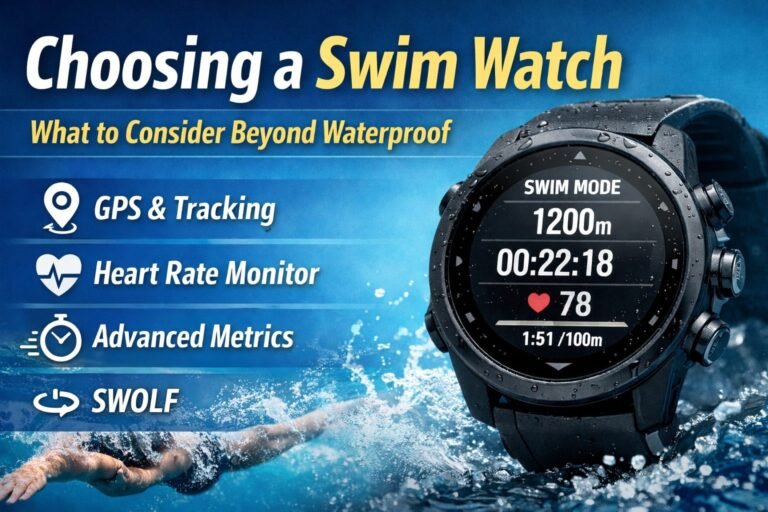
Think waterproof is all that matters? Discover the real features that separate basic watches from true swim-ready performance in this guide: 👉 Swim Watch Features Beyond Waterproof
Disclaimer: This article contains affiliate links. If you purchase through these links, I may earn a small commission at no additional cost to you
All prices are approximate USD RRPs as of April 2026. Battery life figures are Garmin’s official claims under controlled conditions; real-world performance may vary based on settings, activities, temperature, and individual usage patterns. Always verify current pricing and availability with retailers.