
Do I Need a Digital Camera If I Have a Great Smartphone Camera
Smartphone cameras are more powerful than ever, leading many people to question whether a dedicated digital camera is still worth buying. This guide compares smartphone and digital camera performance in low light, zoom, portraits, action photography, RAW editing, and professional use to help you decide which is right for your needs in 2026.

I Have a Great Smartphone Camera. Do I Still Need a Digital Camera?
Where dedicated cameras still beat smartphones — and where they don’t
Quick Answer: If your photography stays within social media, casual family shots, and everyday moments, your smartphone is probably enough. But if you photograph fast action, wildlife, portraits with real depth of field, or anything in genuinely challenging light — a dedicated digital camera still delivers results no smartphone can fully match. The gap has narrowed dramatically. It has not closed.
The Honest Answer to an Honest Question
It is the most reasonable question anyone can ask before buying a camera in 2026. Flagship smartphones — the iPhone 17 Pro Max, Samsung Galaxy S26 Ultra, Google Pixel 10 Pro XL — are genuinely extraordinary imaging devices. They shoot 4K video, carry multiple lenses, perform computational night photography that would have required a tripod and post-processing workflow not long ago, and they fit in your pocket. Why would anyone carry a second device?
The honest answer is: most people do not need to. If the photographs you care about are moments with friends, food, travel snapshots, and content for social media, the smartphone you already own handles all of it. Buying a dedicated camera on top of that would be an indulgence, not a necessity.
But photography is not one thing. It is a collection of very different challenges — fast-moving subjects, low-light venues, distant wildlife, professional portraits, commercial product shots, serious video production. Across those specific challenges, a dedicated camera with a proper sensor and interchangeable lenses still outperforms any smartphone in ways that are not marginal or theoretical. They are fundamental, rooted in physics, and they matter enormously for the photographs that are hardest to take.
This article explains exactly where those gaps are, how large they are in practice in 2026, and how to decide honestly whether a digital camera makes sense for you.
Why Sensor Size Is the Root of Everything
Before comparing any individual features, one fundamental fact explains nearly every difference between a smartphone camera and a dedicated digital camera: sensor size. This is not marketing — it is physics.
A full-frame camera sensor measures 36 × 24 millimetres. The main sensor in a 2026 flagship smartphone — the best available — measures roughly 9 × 7 millimetres. That is a sensor area more than seventeen times smaller than full-frame, and roughly ten times smaller than the APS-C sensors used in mid-range cameras like the Sony a6700 or Canon EOS R50.
Each pixel on a larger sensor has more physical surface area to collect light. A pixel on a full-frame sensor is roughly 5 micrometres wide. A smartphone pixel is closer to 1.2 micrometres. That means each full-frame pixel collects approximately 17 times more light per exposure than a smartphone pixel. More light means cleaner images, better dynamic range, more natural colour, and far better performance when light is scarce.
The physics principle: You cannot software-engineer your way to a larger sensor. Computational photography — the AI-driven image processing in smartphones — compensates impressively, but it does so by making intelligent guesses about information the sensor never fully collected. A larger sensor captures that information optically, without guessing.

- 26.0MP APS-C format Exmor R back-illuminated CMOS sensor
- BIONZ XR processing power for exceptional image quality
- Dedicated AI Processor and Real-time Recognition for accurate subject tracking
$1,498.00
At a Glance: Smartphone vs Digital Camera in 2026
| Category | Smartphone Camera | Dedicated Digital Camera |
| Sensor Size | 1/1.14″ to 1″ — best flagship phones 2026 | APS-C to Full-Frame — up to 17× larger surface area |
| Low-Light Performance | Good with AI multi-frame processing; noise visible at high ISO | Excellent — clean, natural images at ISO 6,400 and beyond |
| Optical Zoom | Up to 10× optical (periscope); quality drops sharply beyond | Interchangeable telephoto lenses — unlimited real optical reach |
| Bokeh / Depth of Field | Computationally simulated — edge artefacts on complex scenes | Real optical — smooth, layered, three-dimensional background blur |
| RAW File Latitude | Moderate — compressed sensor data limits editing headroom | Extensive — 14+ stops dynamic range; full highlight/shadow recovery |
| Action & Burst Shooting | Fast AI AF; limited buffer depth; some missed frames | Up to 20fps, 1,000-frame RAW buffer, AI subject detection |
| Battery Life | Shared with all phone functions — intensive use drains fast | Dedicated; 300–1,500 shots per charge; cheap spare batteries |
| Manual Controls | App-based on one small touchscreen | Physical aperture, shutter, ISO dials; dedicated EVF |
| Lens Flexibility | Fixed 3–5 lens system built into device | Hundreds of interchangeable lenses — prime, zoom, macro, tilt-shift |
| Workflow / Sharing | Shoot, edit, and share on one device in minutes | File transfer step required; more powerful desktop editing |
| Portability | Always with you — zero additional weight | Extra device to carry; sizes range from compact to professional |
| Cost of Entry | Included with your existing smartphone | $679 (beginner mirrorless) to $2,500+ (professional full-frame) |
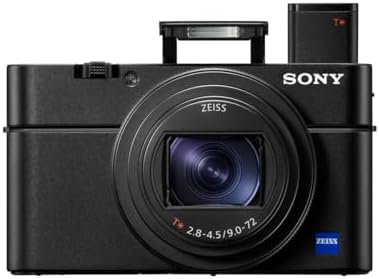
- 20. 1MP 1. 0 Type stacked CMOS sensor, Zeiss Vario Sonnar T 24 200 millimeter F2. 8 F4. 5 large aperture high magnificat…
- 0. 02 sec. High AF speed, 357 point focal plane Phase detection AF and 425 point contrast detection AF
- Up to 20 fps blackout free shooting, using up to 60 times/sec. AF/AE calculations. Diopter Adjustment: -4.0 to +3.0 m-1….
$1,498.00
Where Digital Cameras Decisively Outperform Smartphones
1. Low-Light and Night Photography
Smartphone night modes work by capturing several frames in rapid succession and computationally merging them — brightening shadows, reducing noise, and reconstructing detail the small sensor struggled to collect. For static scenes, the results are often impressive. But there is a critical limitation: the subject must be still. Any movement during the multi-frame capture produces ghosting, motion blur, or AI-interpolated results that look uncanny on close inspection.
A dedicated camera with a large sensor collects genuine photons across its larger surface in a single exposure, producing clean, detailed images at ISO 3,200 or 6,400 that a smartphone cannot approach with moving subjects. Wedding photographers shooting a candlelit reception, event photographers under stage lighting, parents photographing children at an indoor birthday party — these are exactly the moments where the difference is not subtle. A smartphone produces a processed approximation. A camera produces an accurate one.
Winner: Digital Camera Real optical light collection versus computational reconstruction. The gap remains decisive whenever subjects move or light is genuinely scarce.
2. Real Optical Zoom and Telephoto Reach
The best 2026 phones use periscope lens designs to achieve up to 10× optical zoom. At that range, they are genuinely impressive. But at 20×, 30×, or the advertised ‘100×’ you see in marketing materials, what you are seeing is digital zoom: the phone is cropping into a smaller frame and upscaling the result with AI. Detail that was never optically captured cannot be recovered by interpolation.
A dedicated camera with interchangeable lenses faces no such constraint. A 100–400mm telephoto lens on an APS-C body provides real optical reach equivalent to 600mm full-frame. Every millimetre of that reach is genuine glass collecting real light. A sharp, detailed image of a bird fifty metres away in flight is a photograph no smartphone can take regardless of how its zoom specification reads on paper.
Winner: Digital Camera Real optical reach beyond 10× is physically impossible in a phone’s form factor. Digital zoom is cropping and upscaling — not photography.
3. Natural Bokeh and Portrait Depth of Field
Smartphones replicate background blur using portrait mode: a depth map is calculated and the background is computationally blurred using an AI model. In clean, well-lit scenes with clear subject-background separation, portrait mode can be convincing. But look at the edges of hair, at eyeglasses, at a subject near a complex background, or wherever the depth transition is gradual. The computational depth map breaks down. Artefacts appear at edges. The blur looks applied rather than optical.
Real optical bokeh — produced by a large sensor and a fast lens — is physically three-dimensional. It is the product of a real aperture bending light in specific ways. It is smooth, layered, and organic in a way that no AI model can fully replicate because the underlying information was never in the digital domain to begin with.
Winner: Digital Camera Optical depth of field is a physical property of sensors and lenses. It can be computationally approximated but not created — and the approximation has visible limits.
4. Fast Action and Sports Photography
Modern smartphones burst-shoot at impressive frame rates and their AI autofocus has become genuinely capable for everyday subjects. But when subjects move unpredictably and fast — a child sprinting across a pitch, a bird in flight, a racing car through a corner — the combination of a smaller sensor, limited burst depth, and less sophisticated subject-tracking results in a much higher proportion of missed or soft frames.
The Nikon Z6 III shoots at 20 frames per second with a blackout-free electronic viewfinder and a buffer holding over 1,000 RAW frames. The Canon EOS R6 Mark III bursts at 40 frames per second with subject tracking that holds through erratic movement. These are not incremental advantages over smartphones — they are categorical ones.
Winner: Digital Camera 20fps burst, 1,000-frame buffer, and professional AI subject tracking remain entirely in dedicated camera territory in 2026.
5. RAW Files and Post-Processing Latitude
When a smartphone takes a photograph, it immediately applies extensive processing: AI noise reduction, computational HDR, sharpening, colour adjustments, and compression. By the time you see the image, many decisions have already been made by the processing engine — decisions you cannot reverse. Even when shooting in the RAW modes available on flagship phones, the data is limited by what the small sensor collected.
A RAW file from a full-frame camera is a different kind of file. It contains complete, unprocessed sensor data with dynamic range that can exceed 14 stops. Highlights that appear blown in the JPEG preview can be recovered. Shadows that look black retain pullable detail. White balance can be changed completely in post. The file is raw material; the photographer decides what to do with it. The editing latitude of a large-sensor RAW versus a phone RAW is not a marginal difference — it is a fundamentally different starting point.
Winner: Digital Camera Large-sensor RAW files contain optical information a smartphone sensor physically cannot collect. The editing latitude is categorically different, not just marginally better.
6. Manual Control and the Creative Experience
A dedicated camera gives you physical dials for aperture, shutter speed, and ISO. You feel the control of the image in your hands. You look through a viewfinder that places you inside the scene rather than at arm’s length from a glass screen. The act of choosing and mounting a specific lens for a specific job — a 50mm for street, an 85mm for portraits, a 400mm for wildlife — is itself a creative decision that shapes the photograph before you press the shutter.
None of this makes smartphone photography inferior as an art form. Many outstanding photographs are made on phones by thoughtful photographers. But for those who want to grow technically, understand exposure and focal length through real controls, and have a shooting experience that involves craft rather than computational automation, a dedicated camera offers something fundamentally different.
Winner: Digital Camera Physical controls, viewfinder immersion, and lens choice create a creative relationship with the image that no smartphone UI replicates.
7. Battery Life for Extended Shoots
A smartphone’s battery powers everything: calls, apps, GPS, display, streaming, and photography all compete for the same resource. Intensive camera use is one of the fastest ways to drain a phone. At a full-day outdoor event, on a wildlife safari, or on a long hiking trip, a smartphone photographer is likely rationing shots or carrying a power bank well before the day ends.
A dedicated camera has a battery that exists for one purpose. Modern mirrorless cameras deliver 300 to over 1,000 shots per charge, and spare batteries are small, inexpensive, and swappable in seconds. Battery anxiety simply is not a factor for a serious shoot.
Winner: Digital Camera Dedicated, replaceable battery at low cost. A spare battery restores full capacity instantly with no power bank required.
Where Smartphones Genuinely Win
Intellectual honesty requires acknowledging where smartphones have definitively won — and these are not small concessions.
Convenience and Always-With-You
The best camera is the one you have with you. A smartphone is always in your pocket. For the spontaneous photograph — the unexpected moment, the candid expression, the grab shot — no dedicated camera competes with something you are already carrying. This single advantage accounts for why smartphones have become the dominant photographic device on the planet, responsible for the overwhelming majority of photographs taken today.
Integrated Shoot-to-Share Workflow
Shoot, edit, and share on one device in minutes. The smartphone photography workflow has zero friction: the image is immediately in your editing app, immediately shareable, immediately archived and backed up to the cloud. A dedicated camera requires transferring files, processing them, exporting, then sharing. For photographers who publish frequently to social media or need fast editorial turnaround, this workflow advantage is real and significant.
Computational Photography Capabilities
Astrophotography modes on Pixel phones, multi-frame HDR stacking, automatic scene recognition, AI-powered object removal — these are capabilities that dedicated cameras generally do not yet offer in-camera. For photographers who want impressive results with minimal technical effort, computational photography has genuinely closed many gaps that existed five years ago.
Social Media and Screen-Sized Output
For content consumed on a 6-inch phone screen or compressed to social media delivery specifications, the image quality difference between a flagship smartphone and a £2,500 mirrorless camera is largely invisible to the viewer. If your images will only ever be seen at social media resolution, the practical advantage of the dedicated camera exists in the file — but your audience will not see it.
Should You Buy a Digital Camera? A Situation-by-Situation Guide
| Your Situation | Best Choice | Why |
| Casual daily moments, social media content | Smartphone | Zero friction; instant share; always in your pocket |
| Light travel — one device only | Smartphone | Convenience wins; image quality is more than adequate |
| Serious travel photography | Digital Camera | Better files, real zoom range, stronger low-light results |
| Wildlife and bird photography | Digital Camera | Real optical telephoto reach; AI subject tracking at 20fps |
| Portrait photography with natural bokeh | Digital Camera | Optical depth of field cannot be computationally replicated |
| Concerts, events, and dim indoor venues | Digital Camera | Large sensor handles high ISO cleanly — no ghosting |
| YouTube / vlogging (beginner) | Either | Smartphone for simplicity; camera for noticeably better quality |
| Professional or commercial photography | Digital Camera | RAW files, lens choice, and output flexibility are required |
| Street photography — compact and discreet | Digital Camera | A premium compact like the Fujifilm X100VI bridges both worlds |
| Children’s sports and action | Digital Camera | 20fps burst plus AI tracking decisively outperforms any phone |
The Middle Ground: Premium Compacts That Bridge Both Worlds
For photographers who want significantly better image quality than a smartphone but cannot commit to a full interchangeable-lens system, one category deserves serious attention: the premium compact camera.
The Fujifilm X100VI, the best-selling premium compact of 2026 at $1,599, packs a 40.2MP APS-C sensor, in-body stabilisation, and a fixed Fujinon 23mm f/2 lens into a body barely larger than a thick smartphone. There is no lens to change — a deliberate design choice that keeps it compact, discreet, and fast. The image quality it delivers is dramatically beyond any smartphone. Its portability brings it close to carrying a phone.
The Sony RX100 VII and Ricoh GR IV offer compact bodies with sensors meaningfully larger than any smartphone, providing that fundamental physics advantage in low light and depth of field without the weight and bulk of an interchangeable-lens system.
The premium compact case: If you want to step beyond smartphone photography without committing to a full camera system, a premium compact like the Fujifilm X100VI delivers genuine sensor-based advantages over any phone while remaining truly pocketable.
Frequently Asked Questions
Q: Is a smartphone camera good enough for professional photography in 2026?
For specific categories of professional work — social media content, product photography in controlled studio conditions, and some journalistic reporting — smartphones are used by professionals and the results are accepted. For wedding photography, commercial portraiture, sports, wildlife, and any work requiring RAW files and lens flexibility, dedicated cameras remain the professional standard.
Q: Do cameras take better photos than phones?
In most controlled conditions and good light, a well-operated flagship phone and a mid-range mirrorless camera produce images that most viewers cannot distinguish at social media resolution. In low light, at telephoto distances, for subjects in motion, and for large prints requiring editing latitude, cameras produce demonstrably better photographs. The gap is real; whether it matters depends entirely on what you photograph.
Q: Is the iPhone 17 Pro Max better than a dedicated camera?
For convenience, social media, and casual photography: yes, in practical terms, because you always have it with you. For image quality in challenging conditions, real optical zoom beyond 10×, natural depth of field, burst action photography, and professional file quality: no. These are different tools for different jobs.
Q: Will smartphones eventually replace digital cameras?
Smartphones have already replaced cameras for the majority of photographs taken worldwide. What they have not replaced, and are unlikely to replace soon, is the dedicated camera for photography that pushes the limits of light, speed, distance, and creative control. The sensor physics gap, while narrowing, has not closed. Mirrorless camera sales are actually growing in 2026, not declining — reflecting sustained demand from photographers who care about what sensors and lenses make possible.
Q: What is the best camera to buy when upgrading from a smartphone?
The Canon EOS R50 at $679 is the most accessible first mirrorless camera, offering meaningfully better image quality with a clear upgrade path in the Canon RF system. For those who want compact size without the complexity of interchangeable lenses, the Fujifilm X100VI at $1,599 delivers sensor-quality photography in a body that almost fits in a jacket pocket. Either will immediately demonstrate what a larger sensor makes possible.
Our Verdict
If you photograph everyday moments, share primarily to social media, and value having one device for everything — stay with your smartphone. It will not let you down.
If any of the following describes your photography, a dedicated digital camera is worth serious consideration:
- You photograph children, sports, wildlife, or anything that moves fast and unpredictably
- You shoot in low light — concerts, restaurants, evening events — and want accurate images, not processed approximations
- You want portraits with natural, optically-produced background separation
- You photograph birds, wildlife, or sport at distances beyond 10× optical zoom
- You edit photographs seriously and want RAW files with real dynamic range headroom
- You are building a professional photography practice or side income
- You want the creative experience of physical dials, lens choice, and a proper viewfinder
- You take photography seriously as a craft and want tools that match your ambition
The smartphone camera is extraordinary. The dedicated digital camera is better — for the photographs that are hardest to take. Whether those are the photographs you take is the only question that matters.
Disclaimer: This article contains affiliate links. If you purchase through these links, I may earn a small commission at no additional cost to you. This does not affect our editorial recommendations or the prices you pay.
© 2026 Digital Choice Hub · digitalchoicehub.com · Last reviewed: June 2026
Prices accurate as of June 2026. Some links may be affiliate links — see disclosure above.


