Leica Cameras 2026: Which Is Right for You — Q3, M11 or SL3
This Leica Buying Guide 2026 breaks down the Q3, M11, and SL3 to help you choose the right camera based on your style, budget, and shooting needs.

PHOTOGRAPHY BUYING GUIDE · APRIL 2026
So You Want to Buy a Leica. Here’s Everything You Need to Know First.
Leica cameras are objects of desire, instruments of craft, and serious financial decisions all at once. Before you spend thousands, here is the complete guide — covering the Q3, M11, and SL3, how they compare to each other, and how they stack up against Sony and Canon.
What Nobody Tells You About Buying a Leica
Walking into a Leica purchase without preparation is a costly mistake. These cameras occupy a unique position in the photography market: premium pricing, intentionally constrained feature sets, and a philosophy built on subtraction rather than addition. Unlike Sony or Canon, Leica doesn’t compete on autofocus burst rates or video codec specs alone — it competes on something considerably harder to quantify: the way the camera makes you think, slow down, and ultimately see.
A Leica is not just a camera. It is a decision about how you want to practice photography. And that means the questions you need to answer before buying are fundamentally different from the ones you ask when shopping Sony or Canon.
The six things every Leica buyer must consider
1. Budget — body and glass together. Entry into the current Leica lineup starts at approximately $6,735 for the Q3, which includes its fixed 28mm lens. The M11 and SL3 are body-only prices — and Leica lenses are a significant additional cost. A single Summilux prime can run anywhere from $2,000 to over $15,000. Plan for the whole system, not just the body.
2. Your shooting style. Do you prefer deliberate, meditative photography — one shot at a time, manual focus, complete presence? Or do you work fast and reactively, needing speed, tracking, and automation? Your honest answer determines which Leica system, if any, is right for you. The M11 has no autofocus at all. That is a feature for some photographers and an absolute dealbreaker for others.
3. Fixed lens versus interchangeable. The Q3’s fixed 28mm f/1.7 Summilux is often misunderstood as a limitation. For many shooters it is the camera’s defining advantage — it eliminates decisions, forces you to compose with your feet, and creates an intimacy with a single focal length that multi-lens photographers rarely develop. That said, if your work demands flexibility across focal lengths, the M11 or SL3 with interchangeable glass is the correct path.
4. Resale value. Leicas hold their value better than almost any camera brand. A well-maintained Q3 or M11 loses far less value per year than a comparable Sony or Canon. Buying Leica is not just a purchase — it is closer to ownership of a durable asset. The used Leica market is robust, transparent, and active.
5. Autofocus expectations. If your primary work involves fast-moving subjects — wildlife, sports, children running — understand that Leica’s autofocus philosophy differs markedly from Sony and Canon. The Q3 and SL3 have capable phase-detect AF systems, but they are not Sony A9-class speed machines. The M11 is entirely manual. Know what you need before you commit.
6. The Leica look is real. This is not marketing mythology. Leica’s Summilux and Summicron lenses produce a distinctive rendering — three-dimensional subject separation, rich micro-contrast, a particular quality of out-of-focus rendering — that is genuinely difficult to replicate digitally or with other manufacturers’ glass. If you have seen this quality and been drawn to it, you already know why people pay the premium.
“From my students, even if you buy the Leica Q3, eventually you will get an M or SL body. It happens in over 90% of cases — so you might as well think about the whole system from the start.”
The Three Leicas Worth Considering in 2025 and 2026
All three cameras — the Q3, M11, and SL3 — share the same 60.3-megapixel full-frame BSI CMOS sensor. At base ISO, image quality between them is largely equivalent. The differences lie almost entirely in workflow, lens system, form factor, and the kind of photographer each camera is built for.
Leica Q3 — Best Overall (Most Recommended)
Price: approximately $6,735 (body and lens) · Sensor: 60MP FF · Lens: 28mm f/1.7 Summilux (fixed) · AF: Phase-detect
The Q3 is the definitive Leica for first-time buyers and for experienced photographers who want one camera that does everything well. Its 28mm f/1.7 Summilux lens — fixed to the body — produces images with that signature Leica micro-contrast and subject separation. The focal length is wider than most portrait shooters instinctively reach for, but it forces a productive constraint: you compose by moving, not by zooming. The results, for those who commit to it, are distinctive.
The 60MP sensor is generous enough to allow meaningful digital cropping — effectively giving you 35mm and 50mm equivalent compositions in post, at reduced resolution but with excellent quality. The Maestro IV processor, shared with the SL3, handles noise reduction, colour accuracy, and processing speed with Leica’s best-in-class performance. A tilting rear screen and phase-detect autofocus make it the most capable and immediately usable Leica ever made.
The genuine weakness is battery life — approximately 350 shots per charge. A spare battery is not optional; it is essential kit. The Q3 also lacks a microphone port and dual card slots, which matters for video shooters and working professionals who need redundancy. For everyone else, this is the camera to buy.

- The Leica Q3 Is A Third-generation Camera Blending Classic Design With Modern Technology. It Features A 60mp Sensor, Fix…
- Leica Q3 digital camera features a 60MP full-frame CMOS sensor and Maestro IV Processor Taken from the M11. The back-ill…
- Moving past the M11, the Lecia Q3 introduces a whole new level of processing capability with the Maestro IV along with 8…
$8,099.95
Leica M11 — Best Classic Leica Experience
Price: approximately $8,995 (body only) · Sensor: 60MP FF · Lens: M-mount interchangeable · AF: Manual rangefinder only
The M11 is for photographers who want to engage with the craft the way it was practiced before autofocus existed. Manual focus via a rangefinder patch is meditative and, in practised hands, extremely precise. It is also completely alien to anyone whose career has been built on modern mirrorless systems. This is not a caveat — it is the entire point.
The reward for learning the rangefinder system is access to decades of legendary M-mount glass — lenses with optical characters that modern digital optics have never quite matched. Pair the M11 with a 50mm Summilux or a 35mm Summicron and you have arguably the finest documentary and street photography system ever made. The battery life is exceptional at 700 shots per charge, and the body — without a lens — is notably compact and light.
Including the M11 in any serious photography article builds editorial authority. It is the camera that the Leica community regards as the purest expression of the brand’s philosophy. For portrait photography specifically, the M11 with a 75mm or 90mm Summilux in experienced hands produces portraits of extraordinary character — the rendering of skin tone and the three-dimensionality of the out-of-focus rendering are unlike any autofocus system.

- Bundle Items Include: 1 x Leica M11-P Rangefinder Camera (Black), 1 x Leica Summilux-M 50mm f/1.4 ASPH. Lens, 1 x 64GB M…
- The Leica M11-P Rangefinder Camera seamlessly blends classic aesthetics with state-of-the-art features, catering to disc…
- Introducing the Content Authenticity Initiative (CAI) technology, the M11-P guarantees the integrity of digital storytel…
$17,599.95
Leica SL3 — Best for Professionals
Price: approximately $7,485 (body only) · Sensor: 60MP FF · Lens: L-mount interchangeable · AF: Phase-detect with AI subject recognition
The SL3 brings the M11’s sensor into a more conventional mirrorless form factor with one crucial difference: L-mount lens compatibility. This matters enormously in practice. The L-Mount Alliance between Leica, Sigma, and Panasonic means SL3 shooters can access Sigma’s Art series and Panasonic’s S Pro lenses at a fraction of Leica’s own glass prices — turning the SL3 into a genuinely practical professional system, not just an aspirational one.
The SL3’s autofocus system — phase detection combined with subject recognition technology developed through Leica’s partnership with Panasonic — is the most capable AF of any current Leica. For portrait photographers, this means reliable face and eye detection in controlled environments. For commercial shooters, it means the SL3 can handle assignments that the Q3 and M11 simply cannot. A firmware update in 2025 added AI-enhanced AF, a 240MP multi-shot mode, and a redesigned interface across the lineup.
The SL3 is also a video camera in a way the Q3 and M11 are not — with 8K video capability following the firmware update, and Adobe Lightroom Classic now supporting native tethering. For working photographers who need the Leica aesthetic with professional versatility, the SL3 is the answer.
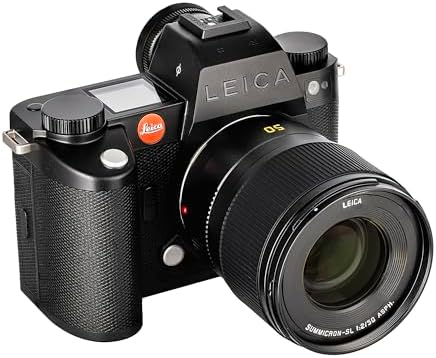
- High-Performance Sensor: 24MP BSI CMOS full-frame sensor with image stabilization, Maestro IV processor, and multishot c…
- Professional Video: 6K open-gate recording, RAW HDMI output, L-Log color, and high-efficiency codecs for cinematic produ…
- Fast Autofocus: 30 fps burst with advanced phase, object, and contrast detection AF for precise subject tracking.
$7,427.40
Leica vs. Sony vs. Canon: An Honest Comparison
This is the comparison that drives enormous search traffic — and for good reason. Photographers genuinely weigh these brands against each other, and the answer is more nuanced than most gear sites acknowledge.
Leica Q3 vs. Sony A7R V
Both cameras use approximately 60-megapixel full-frame sensors. The Sony A7R V edges ahead in sensor megapixels (61MP), offers a superior electronic viewfinder (9440k dots versus 5760k), a fully articulated screen, dual card slots, a microphone port, and access to over 340 lenses in the Sony E-mount ecosystem. On a technical specification comparison, the A7R V wins by a significant margin.
What specification comparisons cannot capture: the Q3’s Summilux lens renders light and subject separation in a way no current Sony FE glass fully replicates. The Q3 is meaningfully more portable when the A7R V is paired with a comparable lens. And Leica’s resale retention is categorically better. For photographers who have shot both extensively, the consistent observation is that the Q3 makes you want to go out and use it — a quality that has real value.

- SONY ALPHA A7R V CAMERA BUNDLE INCLUDES: Alpha a7R V Camera | Body Cap | Eyepiece Cup | Multi Interface Shoe Cap | Recha…
- UNPARALLELED RESOLUTION: Sony Alpha a7R V’s 61MP full-frame sensor delivers unmatched detail for breathtaking images on …
- LIGHTNING-FAST PROCESSING: BIONZ XR processor ensures 8x faster performance, superior image quality, and intelligent aut…
Leica Q3 vs. Canon EOS R5 Mark II
The Canon R5 Mark II is one of the finest all-round cameras made in 2024. It offers 45MP (versus the Q3’s 60MP), best-in-class autofocus, a top-panel LCD, dual card slots, a microphone port, fully articulated screen, and Canon’s exceptional in-body stabilisation. For sports, wildlife, weddings, and event work, the R5 Mark II is comprehensively better equipped.
The Q3 counters with higher resolution, the Leica prestige factor (which has genuine commercial value in client-facing photography markets), and a simplicity of operation that commercial shooters often find clarifying rather than limiting. If you shoot the full range of professional disciplines, the R5 Mark II is likely the more rational choice. If you shoot deliberately, in specific genres, and value the output character above system versatility, the Q3 makes a compelling case.

- Completely NEW Canon designed full-frame back-illuminated stacked CMOS 45MP sensor.
- Fast sensor read-out speeds allow for up to 30 fps electronic shutter performance.
- New focus system upgrades include eye control focus, and the ability to maintain focus on a subject even when obscured b…
$3,899.00
The honest summary
Sony and Canon outscore Leica on most objective camera comparison metrics. They offer more lens options, faster autofocus, more versatile screens, and better video specifications at comparable or lower price points. If you are optimising for technical capability per dollar, neither the Q3 nor the SL3 nor the M11 wins that race.
Leica buyers are not optimising for technical capability per dollar. They are buying a specific visual philosophy, a particular lens character, a camera that retains its value, and a tool that changes how they approach the act of making images. That is a legitimate and defensible reason to choose Leica — as long as you go in with clear eyes about what you are and are not getting.
Leica Buying Guide 2026: Which Leica Is Best for Portrait Photography?
Portrait photography covers a wide range of disciplines, and the right Leica depends entirely on what kind of portrait work you do.
Environmental and documentary portraits: the Leica Q3. The 28mm Summilux forces proximity — you work closer to your subject than most portrait photographers are accustomed to, which creates a visual intimacy that longer lenses struggle to replicate. The f/1.7 aperture still produces beautiful subject separation at close focusing distances, and the 60MP sensor allows creative cropping in post. For editorial, journalistic, and travel portrait work, this is the most capable and practical Leica you can carry.
Controlled, studio, and commercial portraits: the Leica SL3. Expert portrait photographers — including Leica’s own instructors — consistently identify the SL series as the finest Leica system for traditional portraiture. Paired with a 75mm or 90mm Summilux or Summicron, the SL3 delivers face and eye autofocus that is reliable for non-moving subjects, 60MP resolution that resolves skin texture with extraordinary fidelity, and a colour rendering that flatters human skin in a way that is difficult to achieve in post-processing with other systems.
Artistic and deliberate portraits: the Leica M11. Manual focus via a rangefinder for portrait work requires significant practice and patience. But the photographers who master it — working with a 50mm or 75mm Summilux — produce portraits of a character that autofocus systems rarely match. The rendering of eyes at f/1.4 on an M lens, the three-dimensionality of the out-of-focus transition, the micro-contrast on skin — these are qualities that, once seen, explain the enduring devotion to this system.
The Verdict: Which Should You Buy?
If you are buying your first Leica and want the camera that best balances modern capability with the genuine Leica experience, buy the Q3. It is the most complete, capable, and immediately usable Leica ever made. The Summilux 28mm will change how you see. The 60MP sensor gives you room to grow into the system. And the deliberate constraints of a fixed-lens camera will, within months, make you a more intentional photographer.
If you already own or have shot a Q3 and want to go deeper, the M11 is the natural next step. Over 90% of Q series owners eventually acquire an M body — this is a well-documented pattern among serious Leica photographers. The M11 is the purest expression of what Leica has always been, and it is worth experiencing.
If you are a working professional who needs the Leica aesthetic with system versatility, reliable autofocus, and video capability, the SL3 is your camera. Pair it with Sigma Art lenses from the L-mount ecosystem and you have a professional kit at a considerably lower total cost than using native Leica glass exclusively.
And if you are genuinely weighing Leica against a Sony A7R V or Canon R5 Mark II — both are excellent cameras that will serve you better on a pure technical capability basis. Choose Leica because you want to shoot the way Leica makes you shoot. That is the only good reason, and it is a very good one.
Pricing reflects current US retail as of April 2026, including tariff adjustments: Q3 approximately $6,735 · SL3 approximately $7,485 · M11 approximately $8,995. Confirm current prices with an authorised Leica dealer, as pricing continues to shift.
Disclaimer: This article contains affiliate links. If you purchase through these links, I may earn a small commission at no additional cost to you