
PS5 vs Xbox for Beginners (2026): Which Console Is Best?
New to gaming and unsure whether to choose a PS5 or Xbox? This beginner-friendly guide compares price, exclusive games, Game Pass, performance, controllers, subscriptions, and regional popularity to help you choose the best gaming console in 2026. Whether you're buying your first console or shopping for a family member, you'll discover which platform offers the best value for your gaming style and budget.

By Sam — The Tech Analyst
| Quick Answer If you want the simplest path into gaming with the largest library of console-exclusive, story-driven games, choose PlayStation 5. If you already game on a phone, tablet, or PC and want one subscription that follows you everywhere, choose Xbox. Both run the same major third-party games (FIFA, Call of Duty, GTA) at a near-identical level, so the decision mostly comes down to exclusives, ecosystem, and budget — not raw horsepower. |
Why This Decision Feels Harder Than It Should
Walk into any electronics store as a first-time buyer and the choice between a PlayStation 5 and an Xbox Series X|S looks deceptively simple — two boxes, similar prices, similar-looking controllers. In practice, the decision involves several variables that don’t show up on the shelf label: which exclusive games you’ll actually want to play, whether you already own other devices the console needs to talk to, and how you plan to pay for your subscription over the next few years.
Thank you for reading this post, don't forget to subscribe!This guide breaks the PS5 vs Xbox decision down specifically for beginners — the factors that actually matter to a new gamer, rather than the spec-sheet teraflop arguments that dominate enthusiast forums.
Hardware at a Glance
On paper, the Xbox Series X edges out the PS5 in raw GPU power, and the Xbox Series S is the cheapest way into current-generation gaming. In practice, the difference in real-world visual quality between the PS5 and Series X is small enough that most players won’t notice it without a side-by-side comparison.
| Spec | PlayStation 5 | Xbox Series X | Xbox Series S |
| Launch price (current) | $499 (Digital from ~$449) | $649 | $349 |
| GPU power | 10.28 teraflops | 12.0 teraflops | 4.0 teraflops |
| CPU | 8-core Zen 2, 3.5GHz | 8-core Zen 2, 3.8GHz | 8-core Zen 2, 3.6GHz |
| Storage | 1TB SSD (expandable) | 1TB SSD (expandable) | 512GB SSD (expandable) |
| Max resolution | 4K, up to 120fps | 4K, up to 120fps | 1440p upscaled to 4K |
| Disc drive | Yes (Standard) / No (Digital) | Yes | No (digital only) |
Prices and specs reflect official Sony and Microsoft listings as of mid-2026 and are subject to regional variation and ongoing price changes.
What the Numbers Actually Mean for a Beginner
The Series X’s higher teraflop count theoretically gives it an edge in scenes with heavy ray tracing and lighting detail. But Sony’s faster, more developer-friendly SSD architecture closes much of that gap in practice, and most multiplatform games released in 2026 hit near-identical resolution and frame rates on both consoles. A first-time buyer choosing based on these numbers alone is optimizing for a difference they are unlikely to perceive during normal play.
The Xbox Series S is the budget outlier here. It’s a genuine current-generation console, but its weaker GPU and smaller, non-expandable internal storage mean some newer titles run at reduced resolution. It’s a reasonable entry point if budget is the deciding factor and you mostly play at 1080p or on a smaller TV, but it is not a fair stand-in for the Series X in a head-to-head against the PS5.
The Real Decision: Exclusive Games
For most new gamers, the deciding factor isn’t hardware — it’s which games you can only play on one platform. This is where the two companies have taken sharply different strategic paths heading into 2026.
PlayStation has built its identity around cinematic, single-player exclusives. Long-running franchises such as Spider-Man, The Last of Us, God of War, and Horizon remain console-exclusive, and Sony’s 2026 release slate continues that pattern with titles like Marvel’s Wolverine. If you enjoy story-driven, single-player adventures in the style of an interactive film, this library is the strongest argument for PS5.
Microsoft has shifted its approach. Rather than keeping first-party titles locked to Xbox hardware, Microsoft has been publishing a growing number of its own games — including franchises once considered defining Xbox exclusives — on PlayStation as well, while leaning on Xbox Game Pass as its core value proposition rather than hardware exclusivity. The practical effect for a new buyer: fewer games are unique to Xbox hardware, but Xbox Game Pass gives you day-one access to a large rotating catalog, including many first-party titles, for a flat monthly fee across console, PC, and mobile.
In Short
- Choose PlayStation if you specifically want titles like Spider-Man, God of War, or The Last of Us, and prefer buying games individually.
- Choose Xbox if you’d rather pay one subscription and get a constantly refreshed catalog, and you want to play on more than just your TV.
Subscriptions and Ongoing Costs
The console price is only the entry fee. Most new gamers will also want an online subscription, since both platforms require one for online multiplayer.
- PlayStation Plus has three tiers (Essential, Extra, Premium), adding monthly free games, a larger catalog of older titles, and game trials at higher tiers. Major first-party Sony releases generally do not appear on the service at launch — you buy those separately.
- Xbox Game Pass also has multiple tiers, with Game Pass Ultimate bundling cloud gaming, day-one access to Microsoft’s own new releases, and a large rotating third-party library. This tier costs more per month than PlayStation’s top tier, but the day-one inclusion of first-party games is the key value differentiator.
For a beginner on a tight budget, this matters: PlayStation Plus’s cheapest tier is less expensive and still covers online play, while Xbox’s strongest value proposition only really shows up if you commit to the pricier Ultimate tier.
Controller and Comfort
Sony’s DualSense controller is widely regarded as the more technically innovative of the two, with adaptive triggers that change resistance based on in-game context and haptic feedback detailed enough to simulate textures like sand or tension on a bowstring. It charges via USB-C and has no swappable battery option.
Microsoft’s Xbox controller prioritizes ergonomics and consistency — it’s largely unchanged in shape since the Xbox One, runs on AA batteries or an optional rechargeable pack, and many players who have used Xbox controllers for years find the offset analog stick layout more comfortable. Neither is objectively better; this is genuinely a hold-them-and-decide factor, and most retailers have display units you can test before buying.
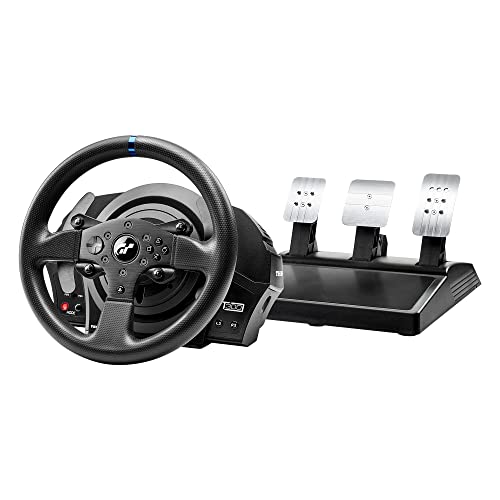
- TRUE SIM RACING IMMERSION: Experience smooth, powerful force feedback that lets you feel every curb, drift, and loss of …
- DESIGNED FOR ALL YOUR FAVORITE GAMES: Built for PS5 and PC gamers who want accuracy and control. Perfect for sim racing …
- SMOOTH, ACCURATE STEERING THAT BUILDS CONFIDENCE: The belt-driven motor provides fluid steering response that helps you …
$369.99
Beyond the Console: VR, Cloud Play, and Multi-Device Use
If virtual reality is a priority, PlayStation has the clearer offering through the PS VR2 headset, which is purpose-built for the PS5 and considered one of the more polished VR experiences available on console hardware. Xbox does not have a native VR headset, though Microsoft’s partnership with Meta allows cloud-streamed play through a Meta Quest headset.
If you want to play the same library across your TV, a laptop, and your phone, Xbox’s cloud gaming (bundled into Game Pass Ultimate) is the stronger fit — it’s designed explicitly for multi-device play. Sony’s equivalent streaming options are more limited by comparison.

Storage and Upgrades
Both consoles support expandable storage, but the experience differs. The PS5’s expansion process — adding a compatible internal M.2 SSD — is generally considered the more straightforward of the two for users comfortable opening the console themselves. The Xbox Series X|S instead uses a proprietary external storage expansion card, which is simpler to install (no console disassembly) but typically carries a price premium over standard SSDs of the same capacity.
Which Console Should a Beginner Choose?
There’s no universally correct answer, but the following rules of thumb reflect how most new buyers in 2026 are deciding:
- Pick PlayStation 5 if: you want the console with the strongest exclusive game library, you primarily play on one TV, and you’re comfortable buying games individually rather than relying on a subscription.
- Pick Xbox Series X if: you want maximum flexibility, plan to use Game Pass heavily, and want the option to keep playing on a laptop or phone when you’re away from your TV.
- Pick Xbox Series S if: budget is the single biggest constraint and you don’t need 4K-native performance — but go in aware that some newer titles will run at reduced visual settings.
Market data from early 2026 shows PlayStation 5 holding a substantial lead in worldwide sales over the Xbox Series X|S, partly a reflection of its exclusives strategy. A larger installed base also means faster matchmaking in multiplayer games and a broader secondhand and accessory market — a minor but real convenience for newcomers.

- Model Number CFI-2000
- Includes DualSense Wireless Controller, 1TB SSD, Disc Drive, 2 Horizontal Stand Feet, HDMI Cable, AC power cord, USB cab…
- Vertical Stand sold separately
Regional Strongholds: Why Where You Live (and Play) Matters
Community size isn’t evenly spread across the world, and that has a real effect on who you’ll be matched with online, how easy it is to find friends on the same platform, and which console your local retailer is more likely to stock and support. The two platforms have notably different strongholds across the three biggest gaming markets — the United States, Europe, and Japan.
Japan: A PlayStation (and Nintendo) Market
Japan is the most lopsided of the three regions. PlayStation 5 has outsold the Xbox Series X|S by more than 10 to 1 in Japan, where Xbox has historically struggled to build a meaningful audience. If you’re gaming primarily within a Japanese community — local friends, regional servers, or Japan-developed titles with strong local support — PlayStation is overwhelmingly the platform your community is already on.
Europe: PlayStation’s Strongest Territory
Europe leans even more heavily toward PlayStation than the global average, with some analyses putting the gap as high as 19 to 1 in unit sales. The UK’s Competition and Markets Authority, reviewing the dedicated home-console market, found PlayStation holding roughly 60–70% of unit sales against Xbox’s 30–40% — still a clear lead for Sony, if less extreme than some other estimates suggest. For a new buyer in Europe, this means PlayStation is statistically the platform most of your potential friends and local online community are likely already using.
United States: Closer, But Still PlayStation-Led
The US is Xbox’s strongest market by far — it accounts for roughly 41% of all Xbox console sales worldwide — and the gap with PlayStation narrows considerably here compared to Europe and Japan. PlayStation still leads US unit sales, with estimates placing the ratio anywhere from roughly 1.5 to 1 up to 3.7 to 1 depending on the source and time period measured, but Xbox’s installed base, Game Pass subscriber numbers, and overall community presence are meaningfully larger in the US than anywhere else. If you’re gaming primarily with a US-based friend group, Xbox is a far more viable “everyone’s already on it” choice than it is in Europe or Japan.
What This Means for a New Buyer
If most of the people you actually want to play with — friends, family, a local gaming community — are already settled on one platform, that social pull often matters more than any spec or exclusive title, since multiplayer games are far more fun with people you know. As a rule of thumb: in Japan and Europe, PlayStation is the safer default if you don’t already have a strong platform preference within your friend group. In the US, the community gap is narrower, so the decision can lean more on exclusives, budget, and ecosystem preference covered earlier in this guide.
Frequently Asked Questions
Do I need to buy extra accessories to get started?
Both consoles include one controller, all required cables, and (for digital editions) no disc drive. Most new players eventually buy a second controller for local multiplayer and may want an upgraded headset for online voice chat, but neither is required to start playing.
Will the games I want to play actually run well on either console?
For the large majority of third-party titles — sports games, shooters, open-world games — yes, performance is close enough on both platforms that it won’t meaningfully affect your experience. The differences that matter are almost entirely about exclusive titles and subscription services, not raw performance.
Is it worth waiting for the next generation of consoles?
Both companies are expected to be roughly a year to eighteen months out from their next hardware generation as of mid-2026. Current consoles are mature, well-supported, and likely to receive new titles for several more years, so waiting mainly makes sense if you’re not in a hurry to start playing.
Can I switch platforms later without losing my purchases?
Digital game purchases are generally tied to the platform you bought them on and don’t transfer between PlayStation and Xbox. Subscription progress (trophies/achievements, save data on some titles via cloud saves) is also platform-specific in most cases, so it’s worth thinking of this as a multi-year commitment rather than a casual trial.
Bottom Line: PS5 vs Xbox for First-Time Buyers
For a first-time console buyer, the PlayStation 5 remains the easier recommendation if exclusive single-player games are the main draw — the platform’s 2026 lineup and historical track record both support that. The Xbox ecosystem is the better fit if flexibility, multi-device play, and a subscription-first model matter more to you than owning a console with games you can’t get anywhere else. Either way, you’re buying mature, well-supported hardware that will play virtually every major third-party release for years to come.
Disclaimer: This article contains affiliate links. If you purchase through these links, I may earn a small commission at no additional cost to you
