
What Happened to Sanyo? The Rise and Fall Explained
It once outsold half of Japan's electronics industry and lit up Piccadilly Circus for over three decades. Then it vanished from stores almost overnight. Here's what actually happened.

Is Sanyo Still in Business in 2026?
| QUICK ANSWER No — Sanyo Electric no longer exists as an independent company. Panasonic absorbed it fully and delisted it from the Tokyo Stock Exchange in 2011, and the Sanyo brand itself was fully retired in Japan by 2013. The Sanyo name survives only as a licensed budget brand — on TVs made by Funai in the US, and on select products in India and Vietnam — while Sanyo’s real legacy, its battery and solar technology, lives on inside Panasonic’s energy and EV businesses. |
Sanyo once outsold half of Japan’s electronics industry and lit up Piccadilly Circus for over three decades. Then it vanished from shop shelves almost overnight. This guide covers exactly what happened to Sanyo Company, what became of Sanyo Electronics and Sanyo Energy, and whether the Sanyo name still exists anywhere today.
Thank you for reading this post, don't forget to subscribe!Sanyo Company: How It Was Founded and Why It Mattered
Sanyo Electric was founded in 1947 in Osaka by Toshio Iue, who had worked for his brother-in-law Konosuke Matsushita — founder of what became Panasonic — before striking out on his own with a borrowed, unused factory to build bicycle generator lamps.
From that modest start, Sanyo grew into one of Japan’s “3S” electronics powerhouses alongside Sony and Sharp, employing over 100,000 people at its peak and posting sales of roughly ¥2.5 trillion in 2003. The Sanyo Company built its reputation across washing machines, radios, hi-fi equipment, and televisions — but its most durable legacy turned out to be batteries and solar cells, categories where it was genuinely ahead of the field.
Sanyo pioneered nickel-cadmium batteries in 1964, nickel-metal hydride cells in 1990, and lithium-ion cells in 1994, holding a 41% share of the global lithium-ion battery market in 2002. It also developed the world’s first hybrid solar cell back in 1992 — technology that would later become central to Panasonic’s interest in buying the company.
Sanyo Electronics: The Products the Brand Was Known For
Sanyo Electronics covered an unusually wide range for a single manufacturer — televisions, hi-fi systems, washing machines, kitchen appliances, and consumer audio equipment sold under the Sanyo name worldwide, alongside commercial refrigeration and air-conditioning units that were less visible to shoppers but commercially significant.
Not every bet paid off. Sanyo pushed its own proprietary video format, V-Cord, as a rival to VHS and Betamax in the 1970s, and it went nowhere. As consumer electronics commoditized through the 1990s and 2000s, Sanyo Electronics found itself squeezed from both sides — premium Japanese rivals like Sony on one end, and increasingly capable, lower-cost Korean (Samsung, LG) and Chinese manufacturers on the other. Management was slow to pivot into smartphones and other emerging categories, and the company made a heavy, poorly timed bet on semiconductor manufacturing just as that market commoditized.
Sanyo Energy: The Battery and Solar Business That Outlived the Company
Sanyo Energy is the part of the story with the happiest ending, even though the Sanyo name itself didn’t survive it. Panasonic’s real interest in acquiring Sanyo was never the TVs or washing machines — it was the energy technology: lithium-ion and NiMH battery manufacturing, HIT solar cells, and the engineering teams behind them.
That technology and talent now sit inside Panasonic’s battery and automotive-energy divisions, and they’re directly relevant to Panasonic’s EV battery supply partnership with Tesla. Eneloop, Sanyo’s well-regarded rechargeable battery line, became a Panasonic brand outright in April 2013, which formally retired the Sanyo trademark on batteries in Japan. In a very real sense, Sanyo Energy is the one piece of the old company that didn’t disappear — it just stopped being called Sanyo.
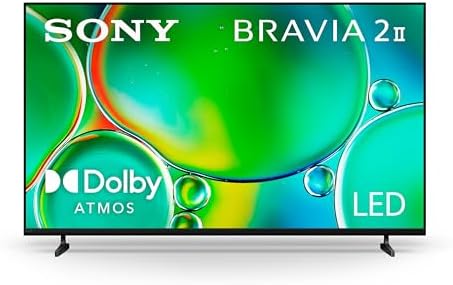
- POWERFUL TV PROCESSING: The 4K Processor X1 delivers a lifelike picture that is full of rich colors and sharp details.
- ENHANCED COLOR AND FINE DETAILS: See natural and precise picture quality with a wide array of colors and dynamic contras…
- EVERYTHING YOU STREAM. ALL IN ONE SCREEN: Get access to all your favorite streaming apps in one place with Google TV. Ea…
$599.99
The Financial Collapse That Forced Panasonic’s Hand
Things came to a head in the mid-2000s. The 2004 Chūetsu earthquake severely damaged Sanyo’s semiconductor plant, contributing to a catastrophic ¥205 billion net loss in fiscal 2005. Mounting semiconductor losses and weak execution forced the “Sanyo Evolution Project,” a 2005 restructuring meant to refocus on batteries, solar, and hybrid-vehicle components — but losses kept piling up, and by the end of 2006 the company was cutting its workforce sharply.
An earlier attempt to sell the semiconductor division fell through when the 2008 credit crisis hit. Sanyo sold its mobile phone division to Kyocera in 2008 for roughly $375–467 million, and by December 2008 Panasonic and Sanyo announced a capital alliance that led to Panasonic acquiring a 50.2% stake in December 2009 for approximately $4.5–4.6 billion.
In July 2010, Panasonic agreed to buy out the remaining shares through a tender offer valued at up to 818.4 billion yen (roughly $9.4 billion) — though that combined figure covered the simultaneous buyout of both Sanyo Electric and Panasonic Electric Works, not Sanyo alone. The U.S. Federal Trade Commission separately forced the companies to divest part of the NiMH battery business (the Sub-C portable NiMH line, sold to FDK Corporation) over antitrust concerns. Full consolidation was complete by April 1, 2011, and Sanyo was delisted from the Tokyo Stock Exchange on March 29, 2011.
Is Sanyo Still in Business Today?
Not as an independent operating company. Sanyo Electric was fully absorbed into Panasonic and delisted from the Tokyo Stock Exchange in 2011, and the Sanyo brand name itself was fully retired in Japan by 2013. It remains registered only as a legal entity to settle final obligations — it does not design, manufacture, or sell anything under its own management anymore.
Any product carrying the Sanyo name today — for example, TVs sold at Walmart and Sam’s Club in the US — is made under license by a completely separate company (Funai Electric, in that case), with no connection to the engineers or factories that built the original brand.
Where the Name Survives Now
The Sanyo name still exists, but only in a scattered, licensed form — it hasn’t existed as one company since 2011. Here’s where it turned up after Panasonic broke the original business apart:
- The semiconductor unit went to ON Semiconductor in 2010.
- The Southeast Asian white goods business (Japan, Indonesia, Malaysia, Philippines, Vietnam) went to China’s Haier Group, completed March 2012.
- A 51% majority stake in the Chinese joint venture Hefei Royalstar Sanyo went to Whirlpool in 2013 for $552 million.
- Panasonic announced in October 2014 it would transfer the Sanyo TV brand to Funai Electric for the US market in exchange for annual royalty payments.
- In India, Panasonic revived the Sanyo name for LED and smart TVs sold via Amazon and Flipkart starting August 8, 2016.
- In 2026, Panasonic announced plans to revive the Sanyo brand again, this time in Vietnam.
The company’s once-famous neon sign in London’s Piccadilly Circus — a fixture since 1978 — went dark in 2011, a fittingly symbolic end. So the honest answer to “does Sanyo still exist” is: the name does, spread across several unrelated owners; the company Toshio Iue built does not.
What’s Left of Sanyo
What actually survives of Sanyo today is its technology lineage rather than the company itself. Former engineers and patents now live inside Panasonic’s battery and automotive-energy businesses, while the Sanyo name itself functions as a legacy brand licensed out piecemeal to companies — Funai, Haier, Whirlpool, and Panasonic’s own regional units — that have no organizational connection to the firm Toshio Iue built in 1947.
One note on accuracy: Sanyo Denki Co., Ltd. (founded 1927, maker of industrial fans, motors, and drive systems, with operations in Germany since 2005) is a completely separate, independent company frequently confused with Sanyo Electric. They share a similar-sounding name in English but are different firms with different Japanese characters (三洋電機 vs. 山洋電気).
The China and South Korea Factor
This is really the throughline of the whole story. Korean conglomerates (Samsung, LG) and later Chinese manufacturers didn’t just compete on price — they industrialized faster in exactly the categories Sanyo had bet on (semiconductors, batteries, appliances, TVs), achieved scale economies that Japanese mid-tier players couldn’t match, and benefited at various points from a yen that made Japanese exports comparatively expensive and pushed manufacturers toward consolidation.
Sanyo wasn’t alone. Aiwa, Kenwood, Sharp, and Toshiba all suffered comparable fates over the same period, as Japan’s once-dominant consumer electronics leadership shifted decisively first to South Korea, then to China.
How Sanyo’s Fall Compares to Other Japanese Electronics Giants
Sanyo’s story fits a broader pattern that played out across Japan’s consumer electronics industry from the 1990s onward:
| Company | What Went Wrong | Outcome |
| Sanyo | Bad semiconductor bet, 2004 earthquake, no smartphone pivot, undercut by Korea/China | Acquired by Panasonic 2009–11; brand now licensed piecemeal |
| Sony | Slow digital transition in the 2000s, cushioned by strong brand and premium positioning | Survived independently; refocused on gaming, imaging, entertainment |
| Sharp | Overinvested in LCD panels as Korean and Chinese rivals scaled cheaper production | Acquired by Foxconn in 2016 after near-bankruptcy |
| Aiwa | Budget positioning collapsed as Chinese manufacturers matched price with better margins | Absorbed by Sony, later reduced to a licensed brand name |
| Toshiba | Nuclear division (Westinghouse) losses plus a major accounting scandal | Broke up and sold off core divisions from 2017 onward |
The common thread: companies that relied on manufacturing scale and price competition, without a strong premium brand identity or a fast pivot to new technology categories, were the ones that didn’t survive independently.
Bottom Line
Sanyo Electric, once a Fortune 500 Japanese electronics giant, collapsed after a disastrous semiconductor bet, a 2004 earthquake, and intensifying competition from South Korean (Samsung, LG) and Chinese manufacturers. Panasonic acquired a majority stake in 2009, fully absorbed the company by 2011, and delisted it from the Tokyo Stock Exchange that same year. The brand name persisted a while longer before being fully retired in Japan by 2013. Today it survives only as a licensed name on budget products in select markets, and its real technological legacy — Sanyo Energy’s battery and solar work — lives on inside Panasonic.
The Cautionary Tale Behind Sanyo’s Fall
Sanyo’s collapse is really a case study in what happens when a manufacturer keeps doing what made it successful for too long. None of it happened overnight — it was a slow accumulation of missed pivots, over-committed bets, and price pressure that had been building for over a decade before the numbers finally forced Panasonic’s hand. Sanyo isn’t a cautionary tale about bad luck; it’s one about a company that stopped adapting while its market kept moving. A few lessons stand out for any electronics company hoping not to repeat it:
- Don’t bet the company on one manufacturing category. Sanyo’s over-commitment to semiconductor manufacturing left it dangerously exposed once that market commoditized and a single earthquake could inflict a fiscal-year-defining loss.
- Move on emerging categories early, not after they’re proven. Sanyo’s slow pivot into smartphones handed the next decade of consumer electronics to competitors who moved first.
- Build a premium brand identity, not just manufacturing scale. Sony’s stronger brand and pricing power cushioned a similar digital-transition stumble; Sanyo and Aiwa, competing mostly on price, had nothing to fall back on once cheaper Korean and Chinese manufacturers matched their quality.
- Treat proprietary formats as a risk, not a moat. Betting on a closed standard like V-Cord instead of the market’s chosen format (VHS) meant the investment produced nothing once the format lost.
- Protect the technology that’s actually defensible. Sanyo’s battery and solar innovation was genuinely ahead of the industry, and it’s the one part of the company Panasonic wanted enough to pay billions for — a reminder that R&D strength in a core technology can outlast the brand built around it.
The wider pattern — Sanyo, Sharp, Aiwa, and Toshiba all losing independent footing within roughly a decade of each other — suggests this isn’t unique to one company’s management. It’s the standard risk profile of the electronics industry itself: fast-moving, capital-intensive, and unforgiving of companies that hesitate on the next shift. For manufacturers competing in that environment today, whether in batteries, displays, or the next category no one’s fully pivoted to yet, Sanyo’s story is a clear enough warning of what happens to the ones that wait too long.
Disclaimer: This article contains affiliate links. If you purchase through these links, I may earn a small commission at no additional cost to you


