
DJI Osmo Pocket 3 Review 2026: Still the Best Vlogging Camera?
he DJI Osmo Pocket 3 stands out as the ultimate vlogging camera in 2026, combining stunning 1-inch sensor quality, smooth gimbal stabilization, and powerful ActiveTrack in a compact, pocket-sized design.

| ⚡ BREAKING — APRIL 16, 2026 The DJI Osmo Pocket 4 has officially launched today at ~$499 USD. We have added a full Pocket 3 vs Pocket 4 comparison table below and updated our buyer verdict. Read the comparison before spending a dollar on either camera. |
| VERDICT — DJI OSMO POCKET 3 9.4 / 10 ★★★★★ The DJI Osmo Pocket 3 is the most complete solo-creator vlogging camera ever put into a pocket. No rival at this size combines a 1-inch sensor, mechanical 3-axis gimbal, 4K/120fps slow motion, and ActiveTrack subject tracking. With its price now significantly reduced ahead of the Pocket 4 launch, it represents exceptional value — but new buyers should read the Pocket 4 comparison below. BUY IF: Solo YouTube/travel vlogging, TikTok & Reels creator, beginner wanting pro results, experienced creator needing a discreet B-cam, budget buyer after Pocket 4 drove prices down. LOOK ELSEWHERE IF: You need waterproofing for surf/rain/dive, optical zoom for wildlife/sports, or the very latest specs — consider the Pocket 4. |
Why the DJI Osmo Pocket 3 Still Dominates Its Category in 2026
The DJI Osmo Pocket 3 launched in October 2023 and did something no pocket camera had managed before: it made the image quality argument redundant. Every previous vlogging camera forced a compromise — either you had image quality and bulk, or portability and mediocre footage. The Osmo Pocket 3 refused that trade-off. With a 1-inch sensor borrowed from premium compact camera territory, a mechanical 3-axis gimbal baked into the body rather than sold as an accessory, and subject tracking capable enough to replace a second person on set, it rewrote the rules for solo content creators.
Now, three years into its life, the DJI Osmo Pocket 3 faces its first credible challenge — from DJI itself. The Pocket 4 has launched today at a lower starting price. So the central question for 2026 is not just “is the Osmo Pocket 3 worth buying?” but “which Pocket camera is right for you?” This review answers both, with updated 2026 pricing, honest coverage of real-world limitations, a complete firmware update history, and a side-by-side comparison so you can make a confident, informed decision.
Current Pricing — April 2026
| ⚠ PRICING NOTICE — US TARIFF IMPACT US tariffs imposed in early 2026 pushed the DJI Osmo Pocket 3 from its $519 launch price to $799 (standard) and $979 (Creator Combo) at peak. Since Pocket 4 rumours began circulating, retailers have been discounting aggressively. Current Amazon prices are significantly lower than the tariff- peak highs. Always check the live link for today’s best price. |
| PRODUCT | CURRENT PRICE | ORIGINAL PRICE | WHERE TO BUY |
| DJI Osmo Pocket 3 — Standard | ~$475 | $519 launch / $799 peak | Amazon (see affiliate link) |
| DJI Osmo Pocket 3 — Creator Combo ⭐ | ~$549 | $669 launch / $979 peak | Amazon (record-low price) |
| DJI Osmo Pocket 4 — Standard (NEW) | ~$499 | New launch price | Amazon / DJI Store |
Prices fluctuate. Always click through to confirm the live price before purchasing. UK prices: ~£399 (standard) / ~£479 (Creator Combo). EU and AUS markets available via regional Amazon or DJI Store.
Full Technical Specifications — DJI Osmo Pocket 3
| SPECIFICATION | DETAIL |
| Sensor | 1-inch CMOS, 9.4 MP |
| Lens / Aperture | 20mm equivalent, f/2.0 fixed |
| Optical Zoom | None — 2x digital zoom only ⚠ Limitation |
| Video — Landscape | 4K up to 120fps · 1080p up to 240fps |
| Video — Portrait / Vertical | 3K maximum — NOT 4K ⚠ Important |
| Colour Profiles | 10-bit D-Log M, D-Cinelike, Normal, HLG |
| Dynamic Range | ~12 stops (estimated in D-Log M) |
| Stabilisation | 3-axis mechanical gimbal (pan / tilt / roll) |
| Gimbal Range | Pan 303° · Tilt 278° · Roll 283° |
| Subject Tracking | ActiveTrack 6.0 — face, object, product modes |
| Screen | 2-inch rotatable OLED touchscreen |
| Audio (Built-in) | 3-microphone array, directional front mic |
| Audio (External) | DJI Mic 2 wireless — 24-bit/48kHz proprietary |
| Battery (Built-in) | 1,300mAh · up to 135 min · ~90–100 min real-world 4K |
| Battery (With Handle) | +950mAh · up to 240 min total |
| Fast Charging | 80% in ~16 min via 65W USB-C PD |
| Storage | MicroSD — UHS-I U3 min; UHS-II V60/V90 for 4K/120fps |
| Live Streaming | 4K via DJI Mimo app ✓ Added May 2024 |
| FPV Gimbal Mode | Yes ✓ Added May 2024 |
| Med-Tele Portrait Mode | Yes ✓ Added Feb 2025 |
| Weather Resistance | NONE — no IP rating, not weatherproofed ⚠ Critical |
| Weight | 179g |
| Dimensions | 5.5 × 1.7 × 1.3 inches |
| Price — Standard (Apr 2026) | ~$475 USD (significantly reduced from $799 peak) |
| Price — Creator Combo (Apr 2026) | ~$549 USD (record-low from $979 peak) |
1. The 1-Inch Sensor: What It Actually Means for Your Footage
When most people think of a pocket camera, they imagine compromised image quality — and they are right, for every pocket camera except this one. The DJI Osmo Pocket 3 carries a 1-inch CMOS sensor — nearly three times the surface area of the Pocket 2’s 1/1.7-inch chip — and that physical size difference translates directly into footage that looks more expensive than it has any right to.
More sensor area means more light gathered per pixel. In practice: lower noise at higher ISO settings, richer and more accurate colour, and genuine background separation — that soft, creamy bokeh that previously required a mirrorless camera and a fast prime lens. Shoot in dimly lit restaurants, at dusk on a city street, or under neon at night, and the DJI Osmo Pocket 3 handles it cleanly where every competing pocket device would produce noisy, washed-out footage.
| 💡 SHOOTING TIP — D-LOG M WORKFLOW Shoot in D-Log M for maximum grading flexibility in DaVinci Resolve or Premiere Pro. DJI provides a free LUT pack that transforms log footage back to a neutral starting point in one click. For everyday social content where you will not grade, the Normal or D-Cinelike profiles produce excellent straight-out-of-camera results. |
2. The 3-Axis Mechanical Gimbal: Why No Software Can Replace It
This is the feature that puts the DJI Osmo Pocket 3 in a category by itself. Every smartphone, action camera, and small mirrorless uses electronic image stabilisation (EIS) — software that crops into the frame and uses algorithms to reduce shake. It works, to a degree. But it introduces rolling shutter artefacts, reduces field of view, and loses effectiveness the moment motion exceeds what the algorithm can predict.
The Osmo Pocket 3 uses a physical, motorised 3-axis gimbal. The camera head pivots on three axes to counteract movement in real time before a single frame is recorded. The results are categorically smoother than anything EIS can produce. Power-walk through a busy market, film from a moving vehicle, jog along a coastal path — the footage looks like it was captured on a dedicated camera rig, because mechanically, it was.
3. 4K/120fps and Slow Motion: Professional Frame Rates in Your Pocket
The DJI Osmo Pocket 3 records 4K at up to 120 frames per second — a specification previously found only in dedicated cinema cameras and top-tier mirrorless bodies. Playing 4K/120fps back at 24fps gives you five times slow motion. 1080p at 240fps pushes into extreme slow-motion territory for product reveals and beauty shots.
| 💡 PRACTICAL NOTE — SLOW MOTION MODE Switching to slow motion on the Pocket 3 requires entering a separate shooting mode rather than simply changing the frame rate setting. This is minor workflow friction worth knowing before your shoot. Set up slow motion mode before the moment arrives. |
4. ActiveTrack 6.0: What It Does Well, and Where It Falls Short
ActiveTrack 6.0 is the feature that makes the DJI Osmo Pocket 3 genuinely transformative for solo creators. Double-tap your face on the touchscreen, place the camera on any flat surface or mini tripod, and walk away. The gimbal will rotate to keep you centred in frame as you move, gesture, and turn — no camera operator required.
When it works, it is extraordinary. Experienced creators report filming full talking-head segments, cooking demonstrations, and travel vlogs with complete freedom of movement and professional-quality framing. For the majority of solo vlogging situations — indoors, in controlled outdoor environments, with a single clearly visible subject — ActiveTrack is reliable and impressive.
Honest ActiveTrack Limitations (What Competitors Don’t Tell You)
In the interest of giving you a complete picture, here is what long-term users consistently report about ActiveTrack’s edges:
- Edge-of-frame drift: The gimbal sometimes allows a subject to drift to the edge of the frame before the tracking algorithm triggers corrective movement. Framing a shot with extra headroom helps compensate.
- Over-eager micro-movement following: At highest tracking sensitivity, the camera follows every small weight shift. For talking-head videos, dial the tracking speed down one notch for a more natural, stable result.
- Loss of lock behind obstacles: If the tracked subject moves behind a pillar or another person, ActiveTrack can lose the lock and require manual reactivation.
- Product shot inconsistency: On motorised sliders, the camera can allow the product to drift to the frame edge before following. Account for this with careful initial framing.
5. The Rotatable OLED Screen: Native Vertical Video, Instantly
The 2-inch OLED touchscreen that rotates 180° is a platform-switching tool. Flip it sideways and the camera automatically switches to portrait mode for native vertical video at up to 3K resolution. Flip it back and you are at 4K landscape for YouTube. One physical gesture — no menu diving, no mounting awkwardly.
| ⚠ VERTICAL VIDEO RESOLUTION LIMIT Portrait/vertical mode is capped at 3K resolution — NOT 4K. This surprises many TikTok and Reels-first creators who assume the full 4K capability carries across both orientations. For most social media platforms 3K is more than sufficient, but it is important to know this going in. |
6. Audio: Built-In Quality and DJI Mic 2 Integration
Audio is the element most new creators underestimate, and the DJI Osmo Pocket 3 takes it seriously. The built-in 3-microphone array captures directional, clean audio with effective wind noise reduction. The DJI Mic 2 wireless system (included in the Creator Combo) operates on DJI’s proprietary protocol — not Bluetooth — transmitting 24-bit/48kHz audio. Clip the transmitter to your collar, power on, and the camera connects within seconds. Quality is excellent even in noisy outdoor environments.
The DJI Mic 2 Audio Sync Drift Issue — Full Explanation
The DJI Mic 2 can record a 32-bit float backup audio file to the transmitter’s internal storage simultaneously with transmitting audio to the camera. In practice, the on-device backup recording drifts out of sync with the camera recording after approximately one to two minutes of continuous recording, making alignment in post-production very difficult.
| ✓ PRACTICAL FIX — AUDIO SYNC Use only the audio transmitted directly to the camera (the standard transmission feed), NOT the backup recording on the transmitter itself. When using the transmitted feed, the sync issue does not occur. DJI has acknowledged this issue; a full firmware resolution has not yet been confirmed. |
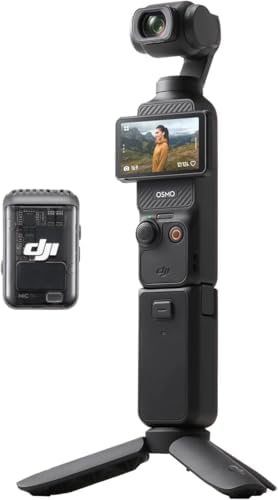
- Capture Stunning Footage – Osmo Pocket 3 features a 1-inch CMOS sensor and records in 4K resolution at an impressive 120…
- Effortlessly Frame Your Shots – Get the ideal composition with Osmo Pocket 3’s expansive 2-inch touch screen that rotate…
- Ultra-Steady Footage – Say goodbye to shaky videos! Osmo Pocket 3’s advanced 3-axis mechanical stabilization delivers su…
$549.99
7. Battery Life and Fast Charging
The built-in 1,300mAh battery delivers up to 135 minutes of continuous recording at 1080p/24fps, and a practical 90–100 minutes at 4K/30fps. Add the Battery Handle (included in the Creator Combo) for up to 240 minutes total runtime. Fast charging via 65W USB-C PD restores 80% battery in approximately 16 minutes — enough turnaround time during a coffee break to get back to a full shooting session.
8. Low Light Performance and ND Filter Guidance
The 1-inch sensor’s low-light capability is one of the DJI Osmo Pocket 3’s most practically valuable features. Night walks, indoor events, golden-hour travel footage — the Pocket 3 handles all of these with minimal noise and retained colour accuracy.
ND Filters — Why You Need Them Outdoors
In bright daylight, the fixed f/2.0 aperture means you need high shutter speeds to achieve correct exposure — but high shutter speeds produce choppy, unnatural-looking video (violating the 180-degree shutter rule). Neutral density (ND) filters reduce light entering the lens without changing aperture or shutter speed, allowing natural cinematic motion blur. ND filters are not optional for serious outdoor shooting — they are essential equipment.
| TYPE | PRODUCT | NOTES |
| ND Filter Set | PGYTECH ND Filter Set for Pocket 3 | ND4/8/16/64 — covers most daylight shooting conditions. Purpose-built for Pocket 3. DJI also offers an official ND set. |
| Waterproof Housing | PGYTECH / PULUZ Waterproof Case | Protects to 40–50m. Full touchscreen operation retained. ~$40–80. Essential for water-adjacent shooting. |
| Wide-Angle Lens | DJI Wide-Angle Lens Attachment | Expands 20mm equivalent to broader field of view. Included in Creator Combo. Useful for indoor spaces and landscape shooting. |
| Storage | SanDisk Extreme Pro 256GB UHS-II | Recommended for 4K/120fps recording. Minimum V60 rating required. 256GB covers a full day of 4K shooting comfortably. |
9. Firmware Updates — What DJI Has Added Since Launch
One of the underappreciated strengths of the DJI Osmo Pocket 3 is that DJI continues to develop the camera through firmware updates. The camera you buy today is meaningfully more capable than the one that shipped in October 2023.
| DATE | UPDATE | WHAT IT ADDS |
| May 2024 | 4K Live Streaming + FPV Gimbal Mode | Native 4K live-streaming via DJI Mimo app to YouTube, Facebook, and custom RTMP destinations. FPV gimbal mode allows the gimbal to follow the roll axis for an immersive first-person perspective — previously impossible on this camera. |
| Feb 2025 | Med-Tele Portrait + Focus-Breathing Comp + D-Log M for Photos | Medium-Tele mode for flattering focal compression on talking-head shots. Focus-breathing compensation reduces visible field-of-view shift during focus changes. D-Log M extended to still photography for the same colour grading latitude videographers have enjoyed since launch. |
10. Editing Your DJI Osmo Pocket 3 Footage
The Pocket 3’s 4K/120fps 10-bit footage is demanding on older hardware. Before committing to this camera, understand the post-production environment you are working in.
- Recommended NLEs: DaVinci Resolve (free, excellent for D-Log M grading), Adobe Premiere Pro, Final Cut Pro (optimal on Apple Silicon). DJI Mimo on mobile handles quick edits directly from the camera.
- Proxy workflow: If your computer struggles with 4K/120fps playback, create proxy files — lower-resolution copies linked to the original media. Both DaVinci Resolve and Premiere Pro handle proxy workflows natively with minimal setup.
- Green screen: The 10-bit colour capture makes green screen keying significantly cleaner than 8-bit video, eliminating the green fringing that plagues compressed formats. An unexpected bonus for virtual background creators.
11. Platform-by-Platform Optimal Settings Guide
| PLATFORM | RESOLUTION | FRAME RATE | ASPECT | COLOUR PROFILE |
| YouTube (Landscape) | 4K (3840×2160) | 30fps or 60fps | 16:9 | D-Log M or Normal |
| YouTube Shorts | 3K (portrait max) | 60fps | 9:16 | Normal / D-Cinelike |
| TikTok | 3K (portrait max) | 30 or 60fps | 9:16 | Normal |
| Instagram Reels | 3K (portrait max) | 30fps | 9:16 | Normal / D-Cinelike |
| Slow Motion | 4K @ 120fps | Playback 24fps = 5x | 16:9 | D-Log M or Normal |
| Hyperlapse / Timelapse | 4K | Camera calculates | 16:9 or 9:16 | Normal |
12. DJI Osmo Pocket 3 vs DJI Osmo Pocket 4 — Should You Wait?
The DJI Osmo Pocket 4 launched today, April 16, 2026, at a starting price of around $499 USD — lower than the Pocket 3’s original launch price. This changes the purchasing conversation significantly. Here is the honest side-by-side comparison every buyer needs before spending money on either camera.
| FEATURE | DJI OSMO POCKET 3 | DJI OSMO POCKET 4 (NEW) |
| Sensor size | 1-inch CMOS | 1-inch CMOS (same) |
| Megapixels | 9.4 MP | 50 MP ✓ Better |
| Max video resolution | 4K / 120fps | 4K / 120fps + potential 6K ✓ |
| Slow motion (max) | 4K/120fps · 1080/240fps | 4K/240fps ✓ Significant leap |
| Dynamic range | ~12 stops estimated | 14 stops confirmed ✓ |
| Built-in storage | None — microSD only | 107GB internal + microSD ✓ |
| Lossless zoom | 2x digital only | 2x lossless zoom ✓ |
| Built-in fill light | No | Yes ✓ |
| Weight | 179g | ~116g (35% lighter) ✓ |
| Battery capacity | 1,300mAh | 1,545mAh ✓ |
| Extra buttons | No | 2 additional buttons ✓ |
| 3-axis mechanical gimbal | Yes ✓ | Yes (improved) ✓ |
| Rotatable OLED screen | Yes ✓ | Yes (retained) ✓ |
| 10-bit D-Log M | Yes ✓ | Yes ✓ |
| Weather sealing | None | None (unchanged) |
| Optical zoom | None | None |
| Starting price (Apr 2026) | ~$475 (reduced) ✓ | ~$499 (new) |
| Creator Combo price | ~$549 (record low) ✓ | ~$649–$749 (new) |
| ✓ BUY THE DJI OSMO POCKET 4 (~$499) IF: You are a first-time buyer choosing between the two. The Pocket 4 offers meaningfully better specs — 14-stop dynamic range, 4K/240fps, 50MP stills, 107GB built-in storage, and a lighter body — at a comparable price to the discounted Pocket 3. For new buyers, the Pocket 4 is the smarter long-term investment. |
| ✓ BUY THE DJI OSMO POCKET 3 CREATOR COMBO (~$549) IF: You specifically want the Creator Combo bundle at its record-low $549. That is $100–$200 cheaper than the Pocket 4 Creator Combo at $649–$749. The DJI Mic 2 + Battery Handle + Wide-Angle Lens bundle represents exceptional value at this price. |

- Capture Stunning Footage – This vlogging camera features a 1-inch CMOS sensor and records in 4K resolution at an impress…
- Effortlessly Frame Your Shots – Get the ideal composition with Osmo Pocket 3’s expansive 2-inch touch screen that rotate…
- Ultra-Steady Footage – Say goodbye to shaky videos. Osmo Pocket 3’s advanced 3-axis mechanical stabilization delivers su…
$423.90
13. Weatherproofing — The Honest Truth Every Buyer Must Know
| ⚠ CRITICAL: ZERO WEATHER SEALING The DJI Osmo Pocket 3 carries absolutely no IP rating. It is not waterproof, not water-resistant, and not dust-resistant. The exposed MicroSD slot, open USB-C port, and gimbal mechanism are all vulnerable to moisture ingress. DJI explicitly confirms this. Shooting in rain, near waterfalls, on boats, or in tropical humidity puts the camera at real risk of irreversible damage. |
What you can do about it: PGYTECH and PULUZ both produce purpose-built waterproof housings for the Pocket 3 that protect to depths of 40–50 metres with full touchscreen operation retained. These cost around $40–80 and effectively eliminate the limitation for water-adjacent shooting. For creators who regularly shoot surf, diving, kayaking, or in persistent rain, the smarter tools for those specific conditions are the GoPro Hero 13 Black (IP68) or DJI Action 5 Pro — waterproof by design, mountable, and built for exactly those scenarios.
Pros and Cons: The Complete Picture
| WHAT WE LOVE | AREAS TO CONSIDER |
| ✓ 1-inch sensor — exceptional low light and dynamic range | → Zero weatherproofing — housing required near water |
| ✓ Mechanical gimbal — silky footage no EIS can match | → No optical zoom — 2x digital only |
| ✓ 4K/120fps with 10-bit D-Log M colour | → Portrait/vertical mode capped at 3K, not 4K |
| ✓ ActiveTrack 6.0 — solo shooting game-changer | → ActiveTrack can drift and lose lock in complex scenes |
| ✓ Instant portrait/landscape flip via rotating screen | → Mic 2 backup recording drifts out of sync after ~60–90 sec |
| ✓ 179g — genuinely pocketable | → Mic 2 must be re-paired when switching to other DJI devices |
| ✓ DJI Mic 2 integration — broadcast-quality wireless audio | → Slow motion requires switching to a separate mode |
| ✓ 80% charge in 16 minutes via USB-C PD | → DJI Mimo app required for setup and some features |
| ✓ Up to 240 min runtime with Battery Handle | → DJI Pocket 4 now available at similar price with better specs |
| ✓ Post-launch firmware: 4K livestreaming, FPV mode, Med-Tele | |
| ✓ Significantly reduced prices — exceptional current value | |
| ✓ Beginner-friendly; deep manual controls for advanced users |
When to Buy the Pocket 3 vs When to Consider Alternatives
| YOUR SITUATION | RECOMMENDATION | REASONING |
| First-time buyer (Apr 2026) | Consider Pocket 4 | Pocket 4 offers better specs at a similar price. Weigh both before deciding. |
| Want Creator Combo value | BUY Pocket 3 Creator Combo ~$549 | Saves $100–$200 vs Pocket 4 Creator Combo. Outstanding value right now. |
| Already own a Pocket 3 | Keep it — skip upgrade | Core sensor is unchanged. No compelling reason to upgrade yet. |
| Solo YouTube / travel vlogging | Either Pocket model | Both cameras built precisely for this. ActiveTrack + gimbal more than sufficient. |
| TikTok / Reels-first creator | Either Pocket model | Vertical mode (3K max) sufficient for both platforms. Flip screen effortless. |
| Need waterproofing (surf/rain/dive) | GoPro Hero 13 / DJI Action 5 Pro | Neither Pocket camera is weatherproof. Use purpose-built action cameras instead. |
| Need telephoto / wildlife / sports | Mirrorless + zoom lens | Fixed 20mm with digital zoom only — not suited for reach-dependent shooting. |
| Budget under $400 | DJI Action 5 Pro (~$299) | Best sub-$400 alternative. Waterproof; smaller sensor; no gimbal but solid EIS. |

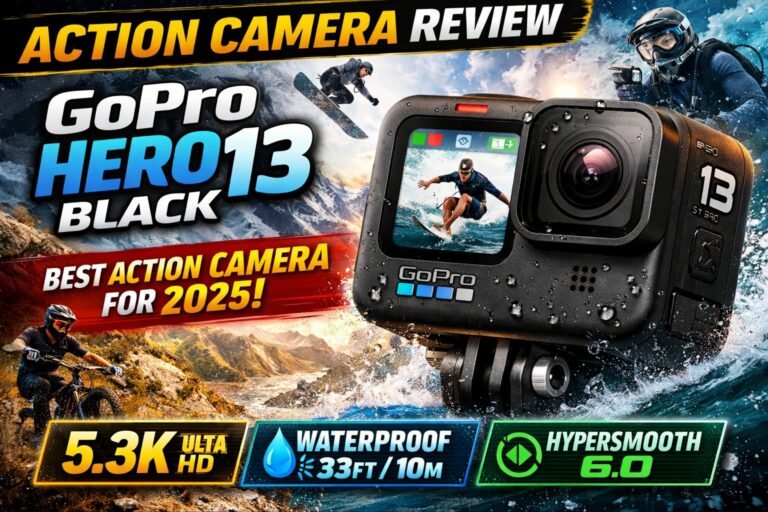
- HB-Series Lenses With Auto Detection: HERO13 Black is compatible with the HB-Series Lenses that let you instantly set up…
- Best-in-Class 5.3K Video: 5.3K video delivers breathtaking image quality with 91% more resolution than 4K and an incredi…
- Burst Slo-Mo: HERO13 Black features our slowest slo-mo ever with the ability to record video clips with the action slowe…
$379.00
Final Verdict — Should You Buy the DJI Osmo Pocket 3 in 2026?
The DJI Osmo Pocket 3 remains one of the most capable vlogging cameras ever made for solo content creators, and at its current discounted prices it represents exceptional value. The core proposition has not changed: no device at this size combines a 1-inch sensor, a mechanical gimbal, 4K/120fps, and intelligent subject tracking in a 179g, pocket-sized body. That is still genuinely extraordinary.
The honest 2026 answer is more nuanced than it was twelve months ago. If you are a first-time buyer choosing between the Pocket 3 and the newly launched Pocket 4, the Pocket 4 offers better specs at a comparable price. For new buyers, that matters. If you are looking at the DJI Osmo Pocket 3 Creator Combo at its record-low ~$549, you are getting the DJI Mic 2 and Battery Handle at a price $100–$200 below what the equivalent Pocket 4 bundle will cost. That is a compelling argument on its own terms.
What you need to know going in: the Pocket 3 is not weatherproofed (needs a housing near water); vertical mode is capped at 3K; ActiveTrack works brilliantly in the majority of situations but has documented edge cases; and the Mic 2 backup audio recording has a known sync drift issue resolved by using the transmitted feed only. These are all manageable with awareness. None of them change the fundamental calculus: for solo creators shooting in normal conditions, the DJI Osmo Pocket 3 produces footage that looks more expensive than the camera that captured it.
| DIGITALCHOICEHUB VERDICT — DJI OSMO POCKET 3 9.4 / 10 ★★★★★ For existing Pocket 3 owners: keep it — no compelling reason to upgrade yet. For first-time buyers: weigh the Pocket 3 Creator Combo (~$549, record low) against the Pocket 4 (~$499 standard). Both are excellent choices. If you want maximum specs for the long term, buy the Pocket 4. If you want the best-value complete kit available right now, the Pocket 3 Creator Combo is an outstanding buy. |
Frequently Asked Questions — DJI Osmo Pocket 3
| Q1: Is the DJI Osmo Pocket 3 waterproof? |
| No. The DJI Osmo Pocket 3 carries no IP rating — it is not waterproof, water-resistant, or dust-resistant. DJI explicitly confirms this. Do not shoot in rain, near waterfalls, on boats, or in high-humidity environments without a third-party waterproof housing. PGYTECH and PULUZ produce purpose-built housings (40–50m rated, full touchscreen operation) for approximately $40–80. |
| Q2: Does the DJI Osmo Pocket 3 have optical zoom? |
| No. The Osmo Pocket 3 has a fixed 20mm equivalent f/2.0 lens with no optical zoom. It offers up to 2x digital zoom only, which reduces image quality. For reach-dependent shooting — wildlife, sports, distant subjects — a mirrorless camera with interchangeable lenses is a more appropriate tool. |
| Q3: What is ActiveTrack on the DJI Osmo Pocket 3? |
| ActiveTrack 6.0 is DJI’s subject-tracking system that uses the 3-axis gimbal to keep a selected face, person, or object centred in frame as they move. Activate by double-tapping a subject on the OLED touchscreen. Known limitations: edge-of-frame drift before tracking triggers, over-eager micro-movement following at high sensitivity, and potential loss of lock when the subject passes behind an obstacle. |
| Q4: DJI Osmo Pocket 3 vs GoPro Hero 13 Black — which should I buy? |
| The DJI Osmo Pocket 3 is superior for vlogging, cinematic footage, and low light (1-inch sensor, gimbal, background separation). The GoPro Hero 13 Black is superior for action sports and water activities (IP68 waterproofing, helmet/chest mounting). For most content creators not doing extreme outdoor sports, the Pocket 3 produces noticeably higher quality footage. |
| Q5: What is the maximum video resolution on the DJI Osmo Pocket 3? |
| Horizontal/landscape mode: 4K (3840×2160) at up to 120fps. Portrait/vertical mode (TikTok, Reels, Shorts): 3K maximum — NOT 4K. This is a fixed hardware limitation. For most social media the 3K cap is not a practical problem, but important to know for creators prioritising vertical content quality. |
| Q6: What microSD card should I use in the DJI Osmo Pocket 3? |
| Standard 4K/30–60fps: UHS-I U3 rated at minimum 60 MB/s write. For 4K/120fps slow motion: UHS-II V60 or V90 required. Recommended: SanDisk Extreme Pro, Lexar Professional 1000x, Sony SF-M series. A 256GB card is the practical sweet spot for a full day of 4K shooting. |
| Q7: Can I live-stream with the DJI Osmo Pocket 3? |
| Yes. A May 2024 firmware update added 4K live-streaming via the DJI Mimo app to YouTube, Facebook, and custom RTMP destinations. The same update also added FPV gimbal mode for a first-person perspective effect. |
| Q8: Should I buy the DJI Osmo Pocket 3 or wait for the Pocket 4? |
| The DJI Osmo Pocket 4 launched April 16, 2026 at ~$499. It offers 14-stop dynamic range, 50MP stills, 4K/240fps, 107GB storage, built-in fill light, and a 35% lighter body. New buyers get better value from the Pocket 4. For the Creator Combo bundle, the Pocket 3 at ~$549 saves $100–$200 vs the Pocket 4 bundle. Existing Pocket 3 owners: no compelling reason to upgrade yet. |
DigitalChoiceHub.com · Researched & Written March 2026 · Updated April 16, 2026
This article contains affiliate links. Purchasing through our links supports the site at no additional cost to you. All prices listed were accurate at time of writing — always click through to confirm live pricing before purchasing.
As someone who’s tested a few vlogging cameras over the years, the DJI Osmo Pocket 3 really does feel like a game-changer for solo creators. The combination of the 1-inch sensor and ActiveTrack makes content creation so much smoother, especially when you’re on the move. It’s great to see a device that balances professional quality with portability in such an effective way.
Thanks for the detailed review — it’s great to see how the DJI Osmo Pocket 3 manages to pack such advanced features into a compact design without compromising on performance. The ActiveTrack functionality seems like a game-changer for solo creators who need reliable tracking while keeping things portable. It’s also reassuring to know the camera handles 4K/120fps so smoothly, which is crucial for high-quality vlogs.
The DJI Osmo Pocket 3 really does feel like a game-changer for solo creators, especially with that 1-inch sensor and ActiveTrack feature. It’s great to see a device that balances professional-grade performance with portability—something I’ve been looking for in my own vlogging setup. Thanks for the detailed take on how it stands out in the market.
As someone who’s tested a few vlogging cameras over the years, the DJI Osmo Pocket 3 really does feel like a game-changer for solo creators. The combination of the 1-inch sensor, smooth stabilization, and ActiveTrack makes content creation so much more dynamic and professional — especially when you’re shooting on the go. It’s great to see a device that balances power and portability without compromising on quality.
As someone who’s tested a few vlogging cameras over the years, the DJI Osmo Pocket 3 really does feel like a game-changer for solo creators. The combination of the 1-inch sensor, smooth stabilization, and ActiveTrack makes content creation so much more dynamic and professional, especially when you’re on the go. It’s great to see a device that balances power and portability without compromising on quality.
The ActiveTrack feature really stands out here — it must be a game-changer for solo creators. No more worrying about shaky footage or needing a second person to help with filming!
I really appreciate how this review highlights both the strengths and limitations, especially around portability and environmental constraints. It’s refreshing to see an honest take that helps creators realistically evaluate whether a camera fits their workflow. The focus on solo content creators makes the practical benefits very clear.
Interesting breakdown! I hadn’t considered how ActiveTrack could simplify solo shooting; it seems like a real game-changer for content creators managing everything themselves.
I love how the review highlights the combination of ActiveTrack and the gimbal—it really shows how solo creators can get smooth, professional-looking footage without carrying extra equipment. It’s a great reminder that sometimes thoughtful design matters more than raw specs. Also, pointing out the limitations for extreme sports and waterproofing helps set realistic expectations.
It’s clear that DJI is aiming to give solo vloggers everything they need in a compact form. I think the 1-inch sensor and the gimbal stabilization will make a huge difference for travel vloggers who need portability without sacrificing quality.
[…] you’re also looking to create stunning videos on the go, check out our guide to the best vlogging cameras of 2026 — perfect for YouTube, social media, and cinematic […]
I couldn’t agree more about the ActiveTrack feature being a total game-changer for solo creators. It honestly simplifies the entire workflow so much that it’s becoming hard to justify hauling around a larger camera rig for daily content.
I really appreciate how you highlighted the 1-inch sensor alongside the limitations regarding waterproofing, as that’s a crucial distinction for travel creators. It’s refreshing to see a review that balances the impressive tracking capabilities with such an honest perspective on where additional gear might still be necessary.
Spot on regarding the form factor; being able to carry a 1-inch sensor without needing a bulky camera bag is exactly what makes this a go-to device for solo creators. It is refreshing to see a tool that makes high-production quality feel so portable and intuitive for everyday storytelling.
I’ve been debating between upgrading my setup for travel blogging, and your point about the form factor versus the 1-inch sensor quality is exactly what I needed to hear. It’s hard to find that balance of stability and portability, so hearing that it holds up in real-world solo shooting scenarios really helps clarify the decision.
As someone who’s tested a few vlogging cameras over the years, the DJI Osmo Pocket 3 really does feel like a game-changer for solo creators. The combination of the 1-inch sensor, smooth stabilization, and ActiveTrack makes content creation so much more dynamic and professional, especially when you’re on the go. It’s great to see a device that balances power and portability so well.