
Amazon Alexa Echo Smart Speaker | Echo Dot Price
Discover Amazon Alexa & Echo: The Revolutionary Voice That Transformed Smart Homes Forever. From simple voice commands to powerful automation, Amazon Alexa and Amazon Echo devices have reshaped how people control lights, music, security, and everyday tasks—ushering in a smarter, more connected home experience.

Imagine asking the air a question and getting an instant answer back — no screen, no typing, no reaching for a switch. Before November 2014, that was science fiction. After Amazon launched the Echo speaker powered by Alexa, it became an ordinary Tuesday morning. A decade on, Alexa runs on hundreds of millions of devices, and the 2025 arrival of generative-AI-powered Alexa+ has turned it from a voice remote control into something closer to a genuine home assistant.
Thank you for reading this post, don't forget to subscribe!This guide covers which Echo device fits your home and budget, what Alexa can actually do day to day, how the product came to exist, and the privacy trade-offs worth knowing before you buy.
| Quick Answer: Alexa is Amazon’s voice assistant; Echo is the family of speakers and screens that run it. Most buyers should start with the Echo Dot (5th Gen, $49.99) for an all-round smart speaker, step up to the Echo Show 8 ($179.99) if you want a screen for video calls and recipes, or choose the Echo Studio ($219.99) for the best sound. Alexa+ is now fully launched — free with Prime, or a limited free tier plus a $19.99/month paid tier for everyone else — and runs on nearly all current Echo devices. |
Amazon Echo Lineup at a Glance
All Echo devices include full Alexa functionality, smart home hub support, music streaming, and calling. The difference is mainly screen, sound, and price.
| Device | Price | Best For | Display |
| Echo Pop | $39.99 | Small rooms, tightest budget | None |
| Echo Dot (5th Gen) | $49.99 | Best all-round pick, any room | None |
| Echo Spot | $79.99 | Nightstand clock + Alexa in one | Small round display |
| Echo Dot Max | $99.99 | Bigger sound in the same footprint | None |
| Echo Show 8 | $179.99 | Video calls, visual recipes, Alexa+ | 8.7-inch touchscreen |
| Echo Show 11 | $219.99 | Larger display, same Show 8 features | 11-inch touchscreen |
| Echo Studio | $219.99 | Best sound, Dolby Atmos | None |
| Echo Show 15 | $299.99 | Wall-mounted home dashboard | 15.6-inch touchscreen |
| Echo Show 21 | $399.99 | Full Alexa+ experience, kitchen hub | 21-inch touchscreen |
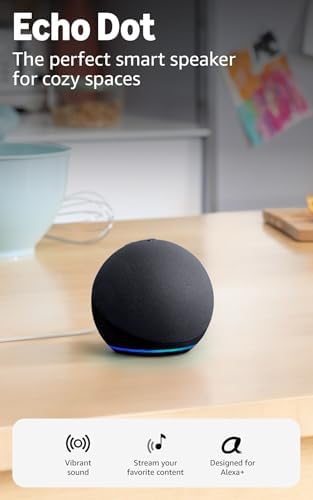
- Your favorite music and content – Play music, audiobooks, and podcasts from Amazon Music, Apple Music, Spotify and other…
- Alexa is happy to help – Ask Alexa for weather updates and to set hands-free timers, get answers to your questions and e…
- Keep your home comfortable – Control compatible smart home devices with your voice and routines triggered by built-in mo…
$49.99
What Is Alexa vs Echo?
Alexa is the brain; Echo is the body. Alexa is Amazon’s cloud-based voice assistant — it processes language, understands context, and generates answers. Echo is the family of speakers and screens you talk to. You speak to an Echo device; it sends your request to Amazon’s servers; Alexa processes it and sends a response back within seconds.
Because Alexa lives in the cloud rather than on the device, it keeps improving without a hardware upgrade. When Amazon launched Alexa+ in February 2025 — powered by Amazon’s Nova models and Anthropic’s Claude — every compatible Echo Show gained dramatically better conversational ability overnight, with no new hardware required.

- MEET THE ALL-NEW ECHO SHOW 15 – A stunning 15.6″ Full-HD (1080p) smart display that’s perfect for your kitchen and ready…
- FAMILY ORGANIZATION HUB – See your top widgets at a glance, like your family’s calendars and to-do lists, local weather,…
- ALL YOUR FAVORITES, ALL RIGHT HERE – Built-in Fire TV unlocks endless entertainment, so you can enjoy your favorite cont…
$299.99
Alexa vs Google Assistant vs Apple HomeKit: Which Ecosystem Fits?
If you haven’t already committed to a smart home ecosystem, it’s worth weighing Alexa against the alternatives before buying. Alexa generally has the broadest third-party device support and the most affordable entry-level hardware, which makes it the easiest starting point if your smart home devices come from a mix of brands. Google Assistant is generally considered stronger at handling open-ended, conversational questions and a wider range of accents. Apple HomeKit has the narrowest device selection of the three and leans toward premium-priced hardware, but pairs tightly with iPhone and puts more processing on-device. None of the three is a wrong choice — in practice, the deciding factor for most households is simply which ecosystem their existing devices, and their phones, already use.
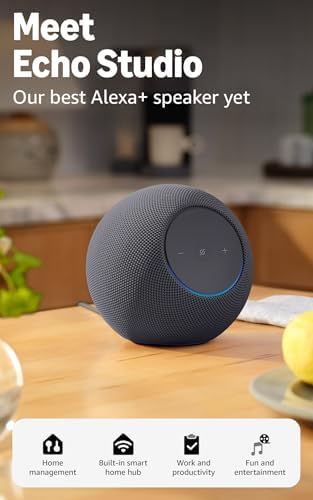
- Meet Echo Studio: Redesigned in a compact size that is 40% smaller than the original to deliver immersive spatial sound….
- It’s like a concert in your living room: Experience immersive sound thanks to spatial audio and Dolby Atmos in a compact…
- Create your ultimate entertainment center: Play music across multiple Echo devices for multi-room music, or pair with a …
The Origin Story: How Alexa Was Born
A Vision Born in 2010
The idea for Alexa took shape inside Amazon’s hardware division, Lab126, around 2010. Work on the device that became Echo started in 2011 under the internal name ‘Project D’ — the Kindle had been Project A, the Fire Phone Project B. Jeff Bezos pushed the idea, reportedly inspired by the ship computer from Star Trek: a system you could simply talk to, that understood natural language and answered back. When Amazon executive Dave Limp first saw the pitch, he knew the concept was compelling but that building it would require inventions that didn’t exist yet.
Building the Brain: Evi, Ivona, and the Voice Problem
Amazon didn’t have the expertise in-house, so it acquired it. In 2012 it bought Evi, a British question-answering AI company, to provide Alexa’s core reasoning engine. In 2013 it acquired Ivona, a Polish text-to-speech company, to give Alexa a natural-sounding voice. Teaching the system to understand speech was the harder problem: Amazon partnered with data-collection firm Appen, filling rooms with Echo units and recording volunteers reading scripted phrases to build a training set covering different accents and noise conditions. Bezos also pushed the team to get response latency under one second — unheard of for a voice assistant at the time.
The Name and the Launch
The device was originally going to be called the Amazon Flash with the wake word ‘Amazon’ — engineers worried this would trigger the device every time an Amazon TV ad played, so both the product name and wake word changed shortly before launch. ‘Alexa’ was chosen partly because its hard consonant sound is easy for recognition software to detect reliably, and partly as a nod to the Library of Alexandria. Amazon launched the Echo on November 6, 2014 to just 80,000 pre-registered units. Early reviews were dismissive — some called it a gimmick — but it sold out almost immediately, and by the end of 2016 Amazon had sold more than eight million Echo and Echo Dot units.
The Echo Family: Full Device Breakdown
Amazon spreads Echo across enough price points and form factors that almost any room or budget has a fit.
- Echo Pop ($39.99) — the cheapest entry point, a compact hemispherical speaker for bedrooms and small spaces, with the same Alexa functionality as pricier models.
- Echo Dot, 5th Gen ($49.99) — the best-selling smart speaker in the lineup: puck-shaped, compact, and the easiest recommendation for a first Echo in any room.
- Echo Spot ($79.99) — a small round display built for nightstands and desks, combining a clock face with Alexa. It’s one of the better-reviewed devices in the lineup, holding around 4.6/5 across more than 41,000 Amazon customer ratings.
- Echo Dot Max ($99.99) — launched in late 2025 as the step-up from the standard Dot, with a dual-driver design Amazon says delivers nearly three times the bass of the 5th-Gen Dot in the same compact footprint. Early customer ratings sit around 4.4/5 from roughly 2,900 reviews.
- Echo Studio ($219.99) — Amazon’s premium audio speaker, with a high-excursion woofer and three full-range drivers for Dolby Atmos spatial sound; the current generation, released alongside the Dot Max, is roughly 40% smaller than the original 2019 Studio.
- Echo Show family (5, 8, 11, 15, 21) — adds a touchscreen for video calls, visual recipes, camera feeds, and photo slideshows. The current Show 8 and Show 11 were refreshed in late 2025 with new displays and cameras built around Alexa+. The Show 15 and Show 21 are designed to be wall-mounted as always-on smart home dashboards; the Show 21 holds around 4.4/5 from over 5,200 Amazon reviews.
- Echo Auto — brings Alexa into the car for hands-free calls, navigation, music, and smart home control while driving.
What Alexa Can Do
Information & Daily Briefings
Alexa handles weather (including forecasts for the days ahead), a personalised news briefing pulled from your preferred outlets, traffic, sports scores, flight status, stock prices, calendar appointments, unit conversions, arithmetic, multiple simultaneous timers and alarms, and shopping or to-do lists — all hands-free.
Smart Home Control
This is where Echo earns its keep as a hub rather than just a speaker. Alexa works with an enormous range of smart home brands — Philips Hue, Nest, Ring, ecobee, Belkin, LIFX, SmartThings and more — over Zigbee, Matter, Thread, and Amazon Sidewalk, so it can talk to almost anything on the market. A single voice command like ‘run the bedtime routine’ can dim the lights, lock the doors, lower the thermostat, and start calming music in one go. Amazon has reported particularly fast growth in voice-controlled fans and air conditioners as this kind of routine catches on.
Entertainment & Music
Alexa integrates with Amazon Music, Spotify, Apple Music, TuneIn, iHeartRadio and Audible, and can group multiple Echo devices to play synced music through the house. The Echo Studio’s Dolby Atmos sound is the standout here. Alexa can also control Fire TV, read Audible titles aloud, and stream podcasts and radio.
Communication & Household Management
Echo devices make hands-free calls and video calls between Echo devices or Alexa app contacts, and the ‘Drop In’ feature works like an intercom between rooms. Alexa can recognise individual voices in a household and tailor reminders, calendars, and shopping lists to each person.
Alexa Skills: 100,000+ Capabilities
Beyond the built-in features, third-party ‘Skills’ extend Alexa into meditation, fitness coaching, games, cooking guidance, language learning, and voice ordering from services like Uber and Domino’s — over 100,000 are available.
Alexa+ in 2025/2026: The Generative AI Upgrade
Alexa+, launched in February 2025, is the biggest change to the assistant since it debuted. Built on Amazon’s Nova models and Anthropic’s Claude through Amazon Bedrock, it holds genuine multi-turn conversations instead of responding to isolated commands, remembers preferences across sessions, and can take multi-step actions on your behalf — booking a restaurant on OpenTable, ordering a ride, and texting the details to a friend, all from one request. It can also read documents you share with it, pull out key information, and add events to your calendar automatically. For Ring camera owners, Alexa+ can summarise the day’s detected events and answer direct questions about them.
Alexa+ is free for Amazon Prime members, or $19.99/month without Prime. It reached full launch to all U.S. users in February 2026 and now runs on most current Echo devices — Dot, Dot Max, Studio, Pop, and the Show lineup — plus compatible Fire TV and Fire tablets (only first-generation Echo hardware is excluded). Amazon also offers a limited free tier for non-Prime members through the Alexa app and Alexa.com.
Who Should Buy an Echo?
Families with Children
Kids can ask homework questions, request bedtime stories, and play educational games hands-free. Amazon Kids+ adds child-safe content and parental controls, and Echo Dot Kids Edition devices come with a durable case and a year of Kids+ included.
Older Adults & Accessibility
Voice control removes a real physical barrier for anyone with limited mobility or vision — lights, locks, thermostats, emergency calls, and medication reminders are all reachable without a screen.
Remote Workers & Professionals
Echo can quietly manage the environment around a workday — focus timers, quick facts without breaking flow, calendar checks, and a Show device doubling as a secondary always-on display.
Music Enthusiasts
The Echo Studio’s Dolby Atmos sound, multi-room grouping, and support for every major streaming service make it a legitimate hi-fi option that happens to be voice-controlled.
Privacy: What You Should Know
Echo devices listen for the wake word continuously — that’s the mechanism that makes hands-free use possible, and it’s fair to weigh that trade-off before buying. Amazon has added real controls in response: every Echo has a hardware mute button that physically disconnects the microphone, voice history can be reviewed and deleted anytime through the Alexa app, and newer devices process more requests on-device rather than sending audio to the cloud. For most buyers, the convenience outweighs the trade-off once those controls are actually in use.
Where Alexa Falls Short
No smart assistant is perfect, and a few honest limitations are worth knowing before you buy:
- Full-featured Alexa+ requires either a Prime membership or a $19.99/month subscription — the free tier for non-Prime users is capped to the Alexa app and Alexa.com, not the Echo device itself.
- Alexa is generally weaker than Google Assistant at open-ended, conversational questions and general knowledge; it’s built and tuned more for commands and smart home control than free-form Q&A.
- Some Echo Show owners have reported screen glare in bright or sunlit rooms in third-party testing.
- Everything runs through the cloud, so an internet outage takes most Echo functionality down with it — there’s no meaningful offline mode.
Frequently Asked Questions
What is the difference between Alexa and Echo?
Alexa is Amazon’s cloud-based voice assistant software; Echo is the physical speaker or screen that runs it. You talk to an Echo device, and Alexa is what processes and answers your request.
Is Alexa+ free with Amazon Prime?
Yes. Alexa+ is included free for Amazon Prime members, or available for $19.99/month without Prime (Amazon also offers a limited free tier for non-Prime users). It reached full launch across most current Echo devices in February 2026.
Which Echo device should I buy?
For most people, the Echo Dot (5th Gen, $49.99) is the best all-round choice. Pick the Echo Show 8 if you want a screen for calls and recipes, the Echo Studio for the best sound, or the Echo Pop if budget is the top priority.
Is Alexa always listening?
Echo devices listen continuously for the wake word only; audio isn’t sent to Amazon’s servers until the wake word is detected. Every Echo also has a physical mute button that disconnects the microphone entirely, and voice history can be reviewed or deleted in the Alexa app.
Can Alexa work without Wi-Fi?
No. Echo devices need an internet connection to send requests to Alexa’s cloud-based processing, though newer models handle a limited set of commands on-device without connectivity.
Is the Echo Spot still available in 2026?
Yes — the current Echo Spot ($79.99) is a small round-display device aimed at nightstands and desks, sitting between the screen-free Echo Dot and the larger Echo Show line.
Conclusion: Is Alexa Still Worth It in 2026?
Echo’s success was never about one standout feature — it’s the accumulation of small conveniences, from a device that could barely play a song reliably in 2014 to a generative-AI home agent in 2026 that can book a table, brief you on the news, and run your smart home from a single voice command. Whether you start with a $39.99 Echo Pop or an Echo Show 21, you’re buying into a device that keeps improving through software alone, not a fixed set of features. The real question isn’t whether Alexa belongs in your home — it’s which device fits the room you’re putting it in.
Disclaimer: This article contains affiliate links. If you purchase through these links, I may earn a small commission at no additional cost to you
Recommended for reading Best Electric Choppers


